

Top Forex Brokers in Kenya Accepting M-Pesa
Explore top Forex brokers in Kenya that support M-Pesa for easy deposits and withdrawals 💱. Learn setup steps, trading features, and safety tips for smooth trading.
Edited By
Amelia Brooks
Linking M-Pesa with PayPal offers Kenyan traders, investors, and fintech professionals a practical way to handle international payments. With M-Pesa being the backbone of mobile money in Kenya and PayPal a dominant global payment gateway, combining the two platforms can simplify cross-border transactions.
While PayPal does not directly support withdrawals to M-Pesa wallets, there are clear, efficient steps to link the accounts through intermediary services, enabling you to transfer money internationally and eventually move funds into your M-Pesa wallet. This setup benefits businesses importing or exporting goods and online freelancers receiving payments in foreign currencies.
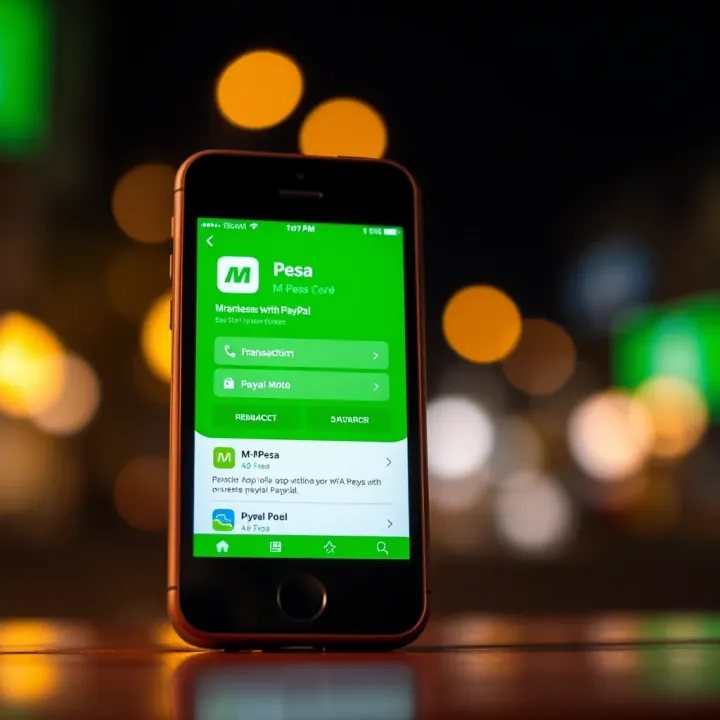
Many Kenyans rely on M-Pesa and PayPal for daily transactions, but seamless linking requires knowing the right process and avoiding common pitfalls, such as account limitations or verification issues.
Before proceeding, ensure your PayPal account is verified, using a Kenyan bank card or linked to a Kenyan bank account, and that your M-Pesa account is active with sufficient balance for withdrawals. This guide will outline the basics of account readiness and introduce methods to bridge the two services.
You'll also learn about alternative routes commonly used in Kenya, such as third-party platforms that facilitate PayPal-to-M-Pesa transfers, plus practical tips for minimising transfer fees and delays.
By the end of this article, you'll be familiar with:
How to set up your PayPal and M-Pesa accounts for compatibility
The stepwise approach to link and transfer funds
Challenges Kenyan users may face and how to handle them
Alternative payment solutions worth considering
This guide aims to give you clarity and confidence managing your international payments, especially in Kenya's mobile money and digital commerce environment.
Grasping how M-Pesa and PayPal operate is key for Kenyan traders, investors, and fintech professionals who deal with cross-border payments. Both platforms serve different but complementary purposes. M-Pesa dominates local mobile money transfers in Kenya while PayPal facilitates international payments, allowing users to transact globally. Understanding their individual strengths helps users navigate the complexities of linking the two for seamless money movement.
M-Pesa is Kenya's mobile money platform launched by Safaricom in 2007. It allows users to send, receive, and store money right from their mobile phone, without needing a traditional bank account. Transactions happen via simple menu options or the M-Pesa app, making it accessible across urban and rural areas alike. For example, a small business owner in Nakuru can receive payments from customers via M-Pesa and pay suppliers without visiting a bank.
The platform's practical relevance lies in its wide use for daily transactions including bill payments, airtime purchase, and peer-to-peer transfers. It has become part of finance's backbone in Kenya’s informal and formal sectors, handling billions of shillings every day. M-Pesa empowers millions by reducing reliance on cash, speeding up payments, and adding security compared to carrying physical money.
M-Pesa supports various economic activities—from settling school fees in Kisumu to enabling boda boda riders in Nairobi to access loans and insurance. Many SMEs rely on M-Pesa to accept payments, manage payroll, and transfer funds quickly. The mobile money service also plays well with government programmes such as cash transfers under national welfare schemes, easing access for beneficiaries.
Its role in Kenya's economy extends beyond individuals to businesses and institutions, demonstrating how mobile money fuels economic inclusion. Given the platform’s integration in day-to-day life, it makes sense why connecting M-Pesa with global payment platforms like PayPal is a topic of increasing interest.
PayPal is an international online payment system widely accepted by merchants and freelancers worldwide. It allows users to send and receive money electronically across borders using their linked bank accounts or cards. For Kenyan users, PayPal represents an entry point to global e-commerce, freelancing payments, and receiving funds from abroad.
As an international payment processor, PayPal helps overcome hurdles in transferring money across countries, including currency conversion and security layers. Its platform supports invoicing, quick payment setups, and buyer protection services—features that local businesses or freelancers in Kenya can use to build trust and professionalism.
Kenyan freelancers, digital entrepreneurs, and traders often use PayPal to receive payments from clients overseas. For example, a software developer based in Nairobi might invoice clients in the US and Europe using PayPal. Similarly, Kenyans involved in e-commerce use PayPal to pay for services or supplies from abroad.
Since most locals do not have Western Union or bank accounts in foreign currencies, PayPal remains a vital tool for international transactions. The challenge lies in converting PayPal funds into M-Pesa for local use, which is why understanding both platforms’ workings is crucial for financial professionals managing cross-border cash flow.
Seamless interaction between M-Pesa and PayPal can empower Kenyan users to expand business horizons, ensuring funds move swiftly from global clients directly into local wallets.
Linking M-Pesa with PayPal is a topic many Kenyan users want to understand better, especially those involved in trading, freelancing, or running SMEs. The idea of combining M-Pesa's widespread mobile money reach with PayPal's international payment network sounds great on paper but comes with a few practical realities and limits. Understanding these can save time and help avoid frustrations when managing cross-border transactions.
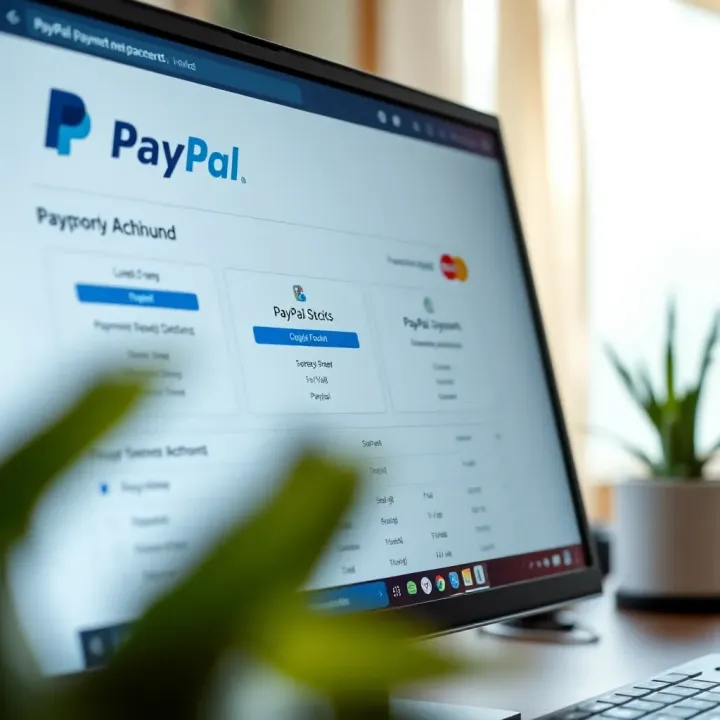
Officially, there is no direct integration between M-Pesa and PayPal. Safaricom, which operates M-Pesa, has not partnered with PayPal to allow seamless transfers or linking accounts directly. This means you cannot simply connect your PayPal wallet to M-Pesa the way you would link bank accounts or cards. For many Kenyan users, this is a surprise, leading some to assume there is a shortcut that does not exist.
The absence of an official link largely reflects regulatory environments and differing operational models. M-Pesa focuses on mobile money within Kenya and select East African countries, while PayPal operates as a global online payment system mainly through bank accounts and credit cards. This structural difference limits direct interoperability.
Common misconceptions often arise, such as believing that PayPal supports M-Pesa top-ups directly or that M-Pesa numbers can receive funds from PayPal accounts. These misunderstandings can lead to users falling victim to scams promising quick linking solutions or unofficial third-party services that may not be reliable. It is critical to rely on verified methods and avoid unofficial shortcuts that risk your funds.
Despite the lack of direct integration, Kenyan users can still utilise indirect channels to manage funds between M-Pesa and PayPal. The most common approach is linking PayPal to a Kenyan bank account. For example, you can link your Equity Bank or KCB account to PayPal and withdraw funds from PayPal into that bank. From there, you move money from your bank to M-Pesa using familiar mobile banking services such as Equitel or M-Co-op Cash.
Another way involves international cards issued by Kenyan banks, such as Visa or Mastercard debit/credit cards. Since PayPal accepts international cards, you can fund your PayPal transactions or receive payments onto the card. You then withdraw the funds to your local bank account, and subsequently transfer to M-Pesa as needed. PayPal's withdrawal options may vary, but using trusted bank partners and cards remains the safest and most efficient route.
While linking PayPal and M-Pesa directly is not yet possible, using linked bank accounts and international cards can effectively bridge the two, allowing Kenyan users to send and receive international payments with relative ease.
Taking these alternative routes requires some setup and patience but is the most practical strategy available. It also complies with Kenya's banking and regulatory guidelines, ensuring your transactions remain secure and legitimate.
Withdrawing PayPal funds to M-Pesa is a practical way to access your international earnings locally. Since there isn’t a direct link between PayPal and M-Pesa, understanding the withdrawal flow helps Kenyan users avoid delays and extra charges. This section breaks down the essential steps and alternatives to receive your PayPal money into M-Pesa smoothly.
Before receiving payments, you need a properly set up PayPal account. Creating one is fairly straightforward—visit PayPal’s website and register using a valid email. Verification involves linking your Kenyan bank account and submitting identification documents like a national ID or passport. This verification ensures you comply with PayPal’s regulations and unlocks features like withdrawing funds.
Linking PayPal with your local bank account is key since it serves as the bridge for transferring funds from PayPal. Most Kenyan banks such as Equity Bank, KCB, and Co-op Bank support this connection. To link, add your bank account details in PayPal’s wallet section and verify a small deposit sent by PayPal. Once confirmed, you can move money from PayPal to your bank account and subsequently to M-Pesa.
A popular workaround uses third-party platforms like WorldRemit, SendWave or TransferTo. These services receive your PayPal funds (through their own systems) and pay out directly to your M-Pesa account. They save you the hassle of multiple bank transfers and currency conversions.
The transfer process usually involves these steps:
Create an account on the chosen platform.
Link your PayPal or use PayPal as a payment method.
Enter the recipient details, including the M-Pesa phone number.
Confirm the amount and exchange rates.
Complete the transfer and wait for funds to reflect in M-Pesa — often within minutes.
These platforms charge service fees, but they offer convenience and faster access to your money.
Once your PayPal funds reach your Kenyan bank account, you can easily send them to M-Pesa. Mobile banking apps from Equity, KCB, or Co-op Bank allow instant transfers to M-Pesa numbers. Alternatively, using the standard M-Pesa menu on your phone (*334#) to buy airtime or pay bills after banking transfer is also quick.
To ensure smooth transactions:
Double-check your M-Pesa number before sending.
Confirm your bank has sufficient balance to avoid failed transfers.
Keep your phone signal stable during the process.
Be aware of daily transaction limits both on your bank and M-Pesa service to avoid disruptions.
Practical tip: Always monitor exchange rates when transferring international funds and choose timings when rates are favourable, especially when using third-party services. This helps you get the most Kenyan shillings from your dollars.
Understanding these stages lets you manage your international payments from PayPal comfortably while leveraging M-Pesa’s wide reach across Kenya.
Navigating the link between M-Pesa and PayPal presents several challenges that Kenyan users must understand before engaging in cross-border transactions. These challenges arise from regulatory hurdles, fees involved, and security risks that impact both the ease and safety of transferring funds internationally. Knowing these obstacles helps traders, investors, and financial analysts anticipate costs and comply with legal frameworks.
Cross-border transaction rules can be quite strict due to laws designed to curb money laundering and illegal transfers. For instance, transactions from PayPal to Kenyan accounts must follow the Central Bank of Kenya (CBK) regulations, which require transparent documentation of funds received. This means frequent checks on the source and purpose of money, complicating seamless transfers from PayPal to M-Pesa.
These restrictions are practical because they protect the local financial system, but they can delay or block some transactions without the proper paperwork. A trader withdrawing funds from international sales via PayPal might face delays if the transaction looks irregular on the system or if the equivalent amount in Kenyan shillings exceeds allowed thresholds.
Kenya Revenue Authority (KRA) and CBK guidelines add another layer of compliance. KRA requires reporting for income sourced abroad, impacting how businesses declare PayPal revenues. Meanwhile, CBK oversees foreign exchange rules that affect converting PayPal balances to local currency and eventual withdrawal to M-Pesa. Ignoring these guidelines can expose users to penalties or frozen accounts.
Typical charges when moving money from PayPal to M-Pesa include withdrawal fees, bank charges, and service fees from intermediaries. For example, a Kenyan importing goods and paying through PayPal will face a percentage deduction at each step—PayPal’s cut, the local bank’s handling fees, and any charges by third-party transfer services. These add up quickly, eating into profits or reducing spending power.
Exchange rate considerations are crucial too. PayPal doesn’t always give the best rates for KSh conversions, often applying a margin over the mid-market rate. This margin means Kenyan users might lose a few shillings for every 100 dollars withdrawn. Given fluctuations in the Shilling’s value, timing transactions could save a small but noticeable amount.
Remember, it’s wise to compare the effective exchange rate—what you actually get after all fees—to ensure you’re not losing much during conversion.
Common scams targeting M-Pesa and PayPal users include phishing emails pretending to be from PayPal or KRA, asking for account details or pin numbers. Some fraudsters send fake payment confirmations or request that users confirm transactions that never happened. In one case, a freelancer in Nairobi lost KSh 20,000 after responding to a scam message claiming her PayPal account was suspended.
Precautions to protect accounts are simple but must be followed strictly. Use strong, unique passwords for PayPal and any linked bank accounts. Kenyan users should enable two-factor authentication (2FA) on PayPal and M-Pesa apps. Avoid clicking on suspicious links or downloading unknown attachments. Lastly, regular checks on account activity can spot unauthorised transactions early before significant loss occurs.
Understanding these challenges and how to handle them ensures Kenyan users can safely and effectively use PayPal alongside M-Pesa. Practical awareness avoids costly mistakes and keeps international business running smoothly.
For Kenyan users, exploring alternatives to linking M-Pesa directly with PayPal is necessary since the two platforms do not have seamless integration. Choosing the right payment platform can influence transaction speed, fees, and convenience. This section highlights practical options and tips that reduce costs and improve efficiency for international payments.
Services like Western Union and WorldRemit offer solid alternatives for sending and receiving money internationally using M-Pesa. These platforms allow users to transfer funds across borders directly to M-Pesa wallets, cutting down cumbersome bank processes. For instance, a Kenyan trader receiving payments from suppliers abroad can use WorldRemit to receive money straight to M-Pesa within minutes.
Compared to PayPal, these platforms often provide quicker access to funds since withdrawals land directly on the mobile wallet without needing linked bank accounts. Also, they usually charge transparent and sometimes lower fees for transferring money to Kenya. Western Union has widespread agent locations and online options, making it a dependable choice, especially when dealing with cash-out requirements.
One major advantage of platforms like Western Union and WorldRemit over PayPal is how they integrate smoothly with M-Pesa, avoiding extra conversion and withdrawal steps involving banks. This simplicity saves time especially for everyday users and small businesses who rely on quick cash flow without dealing with KRA or CBK compliance complexities.
Moreover, while PayPal is great for e-commerce payments and freelancing income, these alternatives better suit remittances and direct money transfers. They also support various foreign currencies tailored to Kenyan market rates, reducing losses during currency conversion.
Choosing currency-friendly services plays a big role in managing costs. Many platforms now offer options to send or receive money in US dollars, euros, or pounds but settle in Kenyan shillings with competitive exchange rates. Keeping an eye on fluctuations in CBK exchange rates can help you plan payments to avoid high conversion fees.
Maximising convenience means using platforms that support M-Pesa withdrawals, provide fast transaction times, and offer clear fee structures. Always compare transfer fees, wait times, and recipient options before sending money abroad or receiving funds. For example, some services charge fixed fees while others work on a percentage basis – choosing based on amount sent affects overall cost.
Practical financial decisions on international payments ensure your money works harder for you. Leveraging platforms that align with M-Pesa’s strengths cuts unnecessary middle steps, saving you both time and shillings.
By considering these alternatives and adopting efficient transaction habits, Kenyan users can navigate the challenges of cross-border money transfers more effectively without depending solely on PayPal's limited compatibility with M-Pesa.
Explore top Forex brokers in Kenya that support M-Pesa for easy deposits and withdrawals 💱. Learn setup steps, trading features, and safety tips for smooth trading.
📱 Learn how to fund your Deriv trading account using Mpesa in Kenya with step-by-step tips, fee info, and troubleshooting advice for smooth deposits.
Learn how D Mpesa transforms money transfers in Kenya with easy features, security tips 🔒, fees info 💰, and steps to maximize financial inclusion 🇰🇪.
🔐 Easy steps to log into Deriv for Kenyan traders, plus tips to fix login issues, boost security, and manage your account settings like a pro.
Based on 14 reviews