
Deriv Forex Trading Guide for Kenyan Traders
Explore Deriv Forex trading in Kenya 🇰🇪! Learn account setup, tools, risk management, and strategies for smart trading. Start your journey with confidence 🚀.
Edited By
Ethan Clarke
Margin in forex trading allows Kenyan traders to control much larger positions in the market than their actual capital would usually permit. In simple terms, margin is a kind of loan provided by your broker to increase your buying power. This means you only need to put down a fraction of the trade value, called the margin requirement, while your broker covers the rest.
Using margin can multiply your profits when the market moves in your favour, but it can also amplify losses if the trade goes against you. That’s why understanding how margin works and managing it carefully is vital for sustaining your trading career, especially in a volatile market like forex.
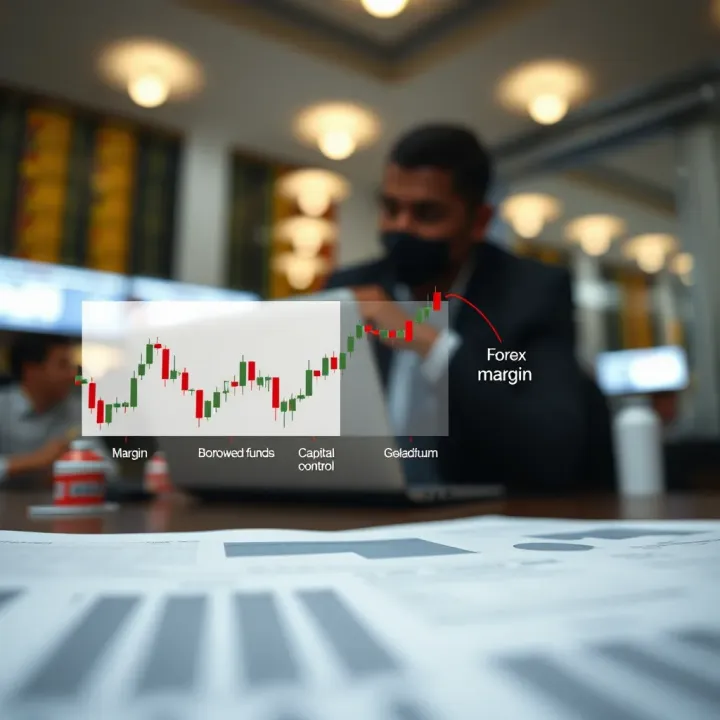
Margin is not free money; it is borrowed capital that comes with the responsibility of monitoring your positions closely to avoid margin calls or forced liquidation.
Suppose you want to trade a standard lot of USD/KES and your broker asks for a 2% margin. The total value of one lot is around KS million given the current exchange rate. You only need to deposit KS00,000 as margin to open the position because the broker covers the remaining KS.9 million.
If the currency pair moves in your direction, your gains are based on the full lot size, not just the margin. However, if the price moves against you, losses will also be magnified, which could eat into your initial KS00,000 faster than a trade without margin.
Margin Requirement: The minimum percentage of the trade value you must have in your account to open or maintain a position.
Margin Call: When your account equity falls below the margin required, the broker will ask you to deposit more funds or close positions to reduce risk.
Kenyan traders should watch their margin levels often and avoid over-leveraging. Brokers in Kenya may have different margin policies depending on the asset, so always check the terms before trading.
Keep margin at manageable levels; using high leverage can be tempting but risky.
Use stop-loss orders to limit potential losses.
Monitor your trades regularly to respond quickly to margin calls.
Understand your broker’s margin policy, especially on the eCitizen or trading platform.
Margin trading can open doors to bigger profits, but caution and clear strategies are key to avoid unnecessary losses in the Kenyan forex market.
Margin is the amount of money you need to put down as a deposit to open a forex position. It acts as collateral, allowing you to control a larger trade with only a fraction of the total trade value. This concept is especially relevant in forex because of the high leverage typically available, enabling traders in Kenya and worldwide to participate with relatively small capital.
Using margin effectively means you can amplify potential returns by trading bigger positions than your account balance alone would allow. However, it also brings higher risk, making it essential to understand how margin works before diving into forex trading.
Margin and leverage often come up together, but they are not the same. Margin refers to the actual funds you deposit to open and maintain positions, while leverage is the ratio that expresses how much your initial margin multiplies your buying power. For instance, if your broker offers 1:100 leverage, a KSh 10,000 margin lets you control a KSh 1,000,000 position.
The practical effect of this is that leverage magnifies both profits and losses, while margin is your skin in the game. Without margin, leverage wouldn’t be possible. Traders need to view margin as a security requirement rather than free money; it ensures brokers mitigate their risk when you trade.
Imagine you have KSh 50,000 in your trading account and your broker requires a 1% margin on a trade. This means you can open a position worth KSh 5,000,000 because your margin deposit covers 1% of that amount. This flexibility allows you to access larger markets and diverse currency pairs without needing huge upfront capital.
That said, the flip side is that small price movements in your favour can yield sizeable gains, but equally, adverse moves may drain your margin quickly, leading to margin calls or forced liquidation of your positions. Carefully balancing how much margin you use per trade plays a key role in sustainable trading.
Initial margin is the deposit required to open a new forex position. It’s set as a percentage of the full trade size. For example, if you want to buy USD/KES worth KSh 1,000,000 and the initial margin requirement is 2%, you’ll need to have KSh 20,000 in your account for that trade.
This upfront deposit allows the broker to offer you leverage but also protects them if the market moves against your position. Your available margin reduces by this amount upon opening the trade.
On the other hand, the maintenance margin is a buffer of funds you need to keep in your account to maintain your position open. If your losses cut into this amount and your margin level drops below the maintenance margin, your broker will issue a margin call. This means you either deposit more funds or close some trades to bring your account back to the required margin level.
Maintenance margin is crucial because it signals when your trading positions become too risky given the funds you have. Ignoring it may lead the broker to close your losing trades automatically (stop-out), resulting in realised losses.
Understanding the distinction between initial margin and maintenance margin helps you manage trades better and avoid surprises from margin calls or forced liquidations.
By grasping these margin fundamentals, Kenyan traders can plan their entry sizes more wisely, manage risk, and trade with confidence within the forex market’s dynamic environment.
Understanding how forex margin operates in practice is vital for Kenyan traders aiming to control positions effectively without tying up too much capital. This section breaks down how to calculate the margin you need, how leverage affects your required funds, and how your position size directly relates to your available margin.
Margin requirements inform traders of the minimum amount needed in their account to open and control a position. For example, if a broker requires a 2% margin for a USD/JPY trade worth KSh 1,000,000, the trader must have at least KSh 20,000 (2% of KSh 1,000,000) as margin. Without this, the broker will not allow the trade to proceed.
Being clear about required margin helps you avoid rejected trades and manage your funds accurately. It also protects you from accidentally overextending your trading capacity, which can lead to margin calls—and ultimately, forced trade closures.
Leverage ratios directly impact how much margin you must set aside. A higher leverage ratio means you need less margin for the same trade size. For instance, with 100:1 leverage, you only need 1% of the position size as margin, so on a KSh 1,000,000 trade, margin required dips to KSh 10,000. However, while this increases buying power, it also magnifies potential losses.
Choosing your position size should be a careful balance between your available margin and your risk tolerance. If your trading account holds KSh 50,000 and the broker’s margin requirement is 2%, you could theoretically open positions up to KSh 2,500,000 (because 2% of 2,500,000 is 50,000). But stretching your margin to the max leaves little room for error.
It’s often wiser to start smaller, perhaps at half or a quarter of your maximum capacity, so your positions have enough buffer when markets move unexpectedly. This approach helps you avoid margin calls and preserve capital.
Different currency pairs require varying margin based on their volatility and the broker’s rates. For example, trading major pairs like EUR/USD typically demands lower margin than exotic pairs like USD/TRY. This is because exotic pairs carry higher risk, and brokers may set margin requirements up to 5% or more.
Let’s say you want to trade KSh 1,000,000 on EUR/USD with a 1% margin requirement; you need KSh 10,000 as margin. But trading the same size on USD/TRY might require KSh 50,000 upfront, due to its 5% margin rate. Being aware of these differences will help you decide where to deploy your funds most efficiently.
Managing margin well means understanding the amount needed for each trade and aligning your position sizes accordingly. This practical knowledge prevents overexposure and supports sustainable trading in Kenya’s forex market.
Trading on margin allows you to use borrowed funds to increase your trading power, but it also brings significant risks. Understanding these risks is essential for any trader, especially in Kenya where market volatility can be high and regulatory oversight may be evolving. This section covers the key challenges: margin calls, stop-outs, and the potential for amplified losses, helping you make more informed decisions.
A margin call happens when your account equity falls below the minimum margin requirement set by your broker. This usually occurs because the value of your open positions has dropped, reducing your available margin. For example, if you opened a position with KSh 50,000 margin and the market moves against you sharply, your equity might dip below the required level, triggering a margin call.
When you get a margin call, the broker will ask you to add more funds or close some positions to restore the margin. This warning means your account is at risk of being liquidated if no action is taken. In Kenya, many traders rely on mobile platforms like MetaTrader linked to Safaricom’s M-Pesa to quickly add funds when such calls occur.
Brokers enforce stop-outs when your losses hit a critical point where your margin can no longer support your positions. This means your broker will start closing trades automatically to prevent your account from going below zero. The exact stop-out level varies per broker but is often around 20-30% of the initial margin.
Stop-outs are practical safeguards but can be harsh. For example, sudden market swings during important announcements like CBK monetary policy updates can trigger stop-outs if you have high leverage. Kenyan traders need to be aware of this and not leave their accounts unmonitored, especially during volatile sessions.
Leverage is both a blessing and a curse. While it magnifies your potential gains, it also increases losses. For instance, using a 1:100 leverage means a 1% adverse price movement could wipe out your entire invested margin. Many new traders in Nairobi and Mombasa have faced heavy losses by overexposing themselves with high leverage.
Proper margin control helps manage this risk. Setting conservative leverage levels, such as 1:10 or 1:20, can reduce exposure. Besides, using stop-loss orders ensures you exit losing trades before they erode all your margin. A common practice among experienced traders on the CMA-regulated forex platforms is to risk only 1-2% of their total trading capital per trade.
Additionally, regularly monitoring your margin levels helps avoid surprise margin calls and stop-outs. Adjusting positions by scaling down or closing losing trades keeps your margin healthy and protects your capital. This approach allows you to trade steadily without chasing quick wins that often lead to wiped-out accounts.
Successful margin trading balances leverage with strict risk controls, never putting all your eggs in one basket. Understanding how margin calls, stop-outs, and amplified losses work will keep your forex trading journey sustainable and profitable.
By recognising these risks and managing them carefully, Kenyan traders can use margin wisely to enhance their trading experience without unnecessary losses.
Managing margin properly can make a big difference in how successful you are at forex trading. Margin allows you to take bigger positions than your capital would normally permit, but it also increases risk. That means you must handle margin with care to avoid losses that could wipe out your account. Following best practices helps you use margin wisely and protects your trading capital.
Choosing the right leverage depends on how much risk you’re willing to accept. For example, a leverage of 1:100 means you control KSh 100,000 with just KSh 1,000 of your own money, but any movement against your trade can quickly eat into your margin. Conservative traders often prefer lower leverage, say 1:10 or 1:20, to keep potential losses in check. If you’re just starting or have limited funds, it’s best to use lower leverage to avoid being forced out of trades prematurely.
Regulatory bodies set limits on leverage to protect traders. In Kenya, the Capital Markets Authority (CMA) requires licensed forex brokers to cap leverage at typically 1:50 or lower for retail traders. Other regions like the EU, under ESMA rules, limit leverage similarly. These limits help curb excessive risk-taking. Make sure your broker complies with these rules and offers leverage that matches your trading style and risk tolerance.
Protecting your margin involves using order types like stop-loss and take-profit. A stop-loss order automatically closes your trade once the price hits a level where losses become unacceptable. This prevents you from losing more than you planned, keeping your margin safe. Take-profit orders lock in gains by closing trades when the price reaches a target profit. This helps you avoid giving back profits if the market reverses.
For instance, if you buy USD/KES at 110.00 and set a stop-loss at 109.50, you limit your loss to about 0.45%. Without stop-loss, a sudden drop could wipe out more of your margin. Setting your stop-loss too tight, however, can result in premature exits due to normal market fluctuations. Balancing stop-loss distance with market volatility is key.
Using tools to track your margin usage can prevent nasty surprises. Most platforms provide a margin level indicator showing how much of your available margin is in use. For example, if your margin level falls below 100%, you risk a margin call or forced liquidation. Keeping an eye on this helps you adjust before it gets critical.
Adjusting trades to maintain a healthy margin means reducing position sizes or closing some trades when margin levels get too low. If you spot your margin slipping towards dangerous levels, it’s wiser to scale back rather than wait for a broker to stop out your positions. Regular monitoring also enables you to decide when to add funds or take profits to free up margin.
Staying disciplined with margin practices safeguards your trading journey. It helps you avoid margin calls and allows you to trade calmly, even during volatile market moments.
Following these practical steps—setting safe leverage, protecting positions with stop-loss orders, and keeping a close watch on your margin—are crucial to trading forex successfully in Kenya or beyond.
Trading on margin in the forex market comes with both opportunities and risks, so having a regulatory framework is essential for protecting traders and maintaining market integrity. In Kenya, this framework is guided mainly by the Capital Markets Authority (CMA), which regulates financial markets, including forex trading involving margin. Understanding the local regulatory environment helps Kenyan traders make informed decisions and avoid scams that prey on inexperienced investors.
CMA Kenya plays a significant role in setting the rules and standards for forex margin trading. It ensures brokers and trading platforms offer transparent margin requirements and maintain fair trading practices. For example, CMA enforces rules on leverage limits to protect retail traders from excessive risk exposure. This is crucial since unregulated leverage can amplify losses beyond a trader's capital.
Local regulations also require firms offering forex margins to clearly disclose margin calls and stop-out procedures. This transparency helps traders understand when their positions might be liquidated, avoiding unexpected account wipeouts. Through regular inspections and monitoring, CMA reduces the risk of fraud and unfair brokerage activities.
Regarding compliance, brokers must obtain CMA approval before operating. They have to meet specific capital adequacy standards and maintain proper client fund segregation, so your trading money is protected even if the broker faces financial difficulties. This means that when you deposit KS0,000 as margin, the broker shouldn't mix it with their operating funds.
Choosing a broker with recognised licenses from both CMA and Kenya Revenue Authority (KRA) is crucial. A KRA-compliant broker ensures proper tax procedures, which is vital if you are actively trading and need clear records for tax reporting. CMA’s license, on the other hand, reassures you that the broker operates under legal supervision and obeys regulations designed to protect traders.
To verify broker credentials, start by checking the official CMA website's list of licensed forex brokers. Brokers must also provide physical office addresses and be reachable through customer service channels. You can contact CMA directly to confirm if any broker is currently suspended or under investigation. Kenya’s forex market is growing, but unfortunately, fake brokers pop up frequently. Verifying credentials before depositing funds can save you from substantial losses.
Always prioritise brokers with full local licences and transparent operations. The safest way to trade margin in Kenya is through an established and regulated broker who complies with CMA and KRA requirements.
Visit the CMA Kenya website and search for registered forex brokers.
Confirm brokers have active KRA PINs as proof of tax compliance.
Contact CMA for any unresolved broker concerns.
Look for reviews from Kenyan traders on popular trading forums or social media.
Following these steps reduces risks and provides peace of mind when trading forex on margin locally.
Explore Deriv Forex trading in Kenya 🇰🇪! Learn account setup, tools, risk management, and strategies for smart trading. Start your journey with confidence 🚀.
🤖 Explore bot trading in forex: understand how automated systems work, key benefits, risks, setup tips, and insights for traders in Kenya. 📈🇰🇪
Explore how Kenyan investors can start copy trading 📈, learn which local platforms to use, understand risks, and get tips to manage investments wisely.
📈 Explore day trading in Kenya with tips on strategies, risk management, tools, emotional control, and complying with local rules for smart trading.
Based on 9 reviews