

Understanding Derivatives and Their Uses
📊 Discover how derivatives work in calculus & finance with clear examples. Understand their role in academics and real-world use in Kenya and beyond.
Edited By
Charlotte Evans
Derivatives play an important yet often misunderstood role in Kenya's financial markets. Simply put, a derivative is a contract whose value depends on the performance of an underlying asset, such as stocks, interest rates, commodities, or currencies. These financial instruments let investors and businesses manage risks or speculate on market movements without owning the assets directly.
In Kenya, derivatives are still emerging, mostly traded on the Nairobi Securities Exchange (NSE) or through over-the-counter (OTC) deals. For example, a farmer growing maize might use a futures contract to lock in a selling price ahead of harvest, reducing uncertainty caused by fluctuating market prices. This practical use of derivatives helps stabilise income for producers.

There are several common types of derivatives:
Futures and Forwards: Agreements to buy or sell an asset at a future date for a set price. Forwards are usually private and customised, while futures trade on formal exchanges like NSE's derivatives platform.
Options: Contracts giving the right, but not the obligation, to buy or sell an asset at a predetermined price within a specific time frame.
Swaps: Contracts to exchange cash flows or financial instruments, for example, swapping fixed interest payments for variable ones to manage interest rate risk.
Using derivatives requires a clear understanding of the associated risks. Prices can be volatile, and leverage—using borrowed funds—can multiply losses. For Kenyan investors, it’s vital to follow Capital Markets Authority (CMA) regulations that govern derivative trading to safeguard against fraudulent schemes.
Derivatives offer tools for hedging risks and enhancing portfolios but demand cautious, knowledgeable use, especially in Kenya's developing markets.
Understanding these basics lays a strong foundation for Kenyan traders, brokers, and business owners to explore derivatives thoughtfully. The next sections will cover how derivatives function in financial markets, examples relevant to Kenya’s economy, and regulatory considerations shaping their use locally.
Derivatives are financial instruments whose value depends on an underlying asset such as stocks, commodities, currencies, or interest rates. These tools help investors and businesses manage risk or speculate on price movements. In Kenya's growing financial markets, derivatives offer vital ways to stabilise earnings or capitalise on market changes, especially for sectors like agriculture and forex trading.
In simple terms, a derivative is a contract between two parties that derives its value from the performance of an underlying asset. The contract itself doesn't represent ownership of the asset but is tied to its price movement. This enables participants to protect themselves from fluctuating prices or to profit based on their predictions.
For example, a Kenyan farmer worried about falling maize prices might use a derivative to lock in a selling price ahead of harvest, shielding against a market downturn. This practical use illustrates why derivatives have become an important part of financial planning.
The worth of a derivative moves in close connection with the underlying asset. If the asset’s price rises or falls, the value of the derivative usually changes accordingly. This means investors don’t trade the asset directly but trade contracts based on what the asset is worth.
Take currency derivatives, which are common in Kenya due to foreign exchange exposure. A business importing goods from outside Kenya might use a derivative based on the US dollar to fix costs despite shilling fluctuations. The derivative’s price tracks the dollar value, protecting the business from losses caused by exchange rate swings.
Derivatives can be based on many kinds of assets: stocks represent company shares, commodities include goods like coffee or maize, currencies relate to foreign exchanges, and interest rates affect loans and bonds. Each type has different market dynamics but serves to transfer or share risks.
Commodity derivatives are especially relevant in Kenya, where agriculture and energy products dominate exports. Interest rate derivatives help companies with loans manage sudden cost increases, especially when borrowing from banks or using bond markets.
In Kenya, common underlying assets for derivatives include:
Agricultural products: Maize, tea, coffee — farmers or traders use derivatives to stabilise prices amid seasonal variability.
Currencies: The Kenyan shilling (KES) against the US dollar or euro, crucial for importers and exporters hedging currency risk.
Stocks: Shares listed on the Nairobi Securities Exchange (NSE), where investors might speculate or hedge using derivatives linked to equities.
Interest rates: Given fluctuating Central Bank of Kenya rates, debt holders use interest rate swaps or futures to manage the cost of borrowing.
Derivatives provide Kenyan investors and businesses with tools to manage uncertainty efficiently, allowing them to secure better financial outcomes even amid market volatility.
This foundational understanding of what derivatives are and their underlying assets sets the stage for exploring how these financial instruments operate in practice and how they impact Kenya’s financial environment.
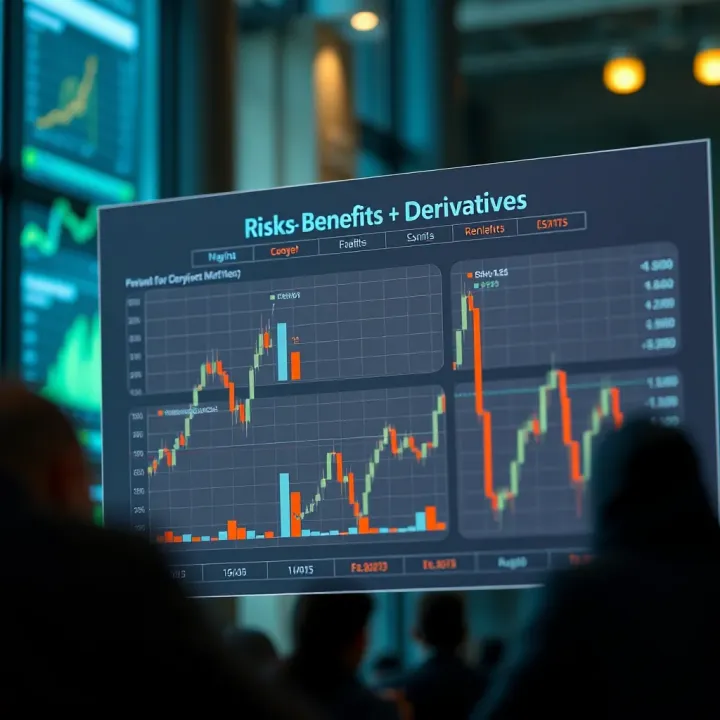
Derivatives come in several forms, each serving unique purposes for investors and businesses. Understanding the main types of derivative instruments helps Kenyan market participants manage risks or explore profit opportunities effectively. The most common categories are forwards and futures, options, and swaps. Each has specific features and applications, particularly relevant to Kenya’s evolving financial markets.
Forwards are private agreements between two parties to buy or sell an asset at a predetermined price on a specific future date. They’re customised to the needs of the buyer and seller, which means they are not traded on formal exchanges. In contrast, futures contracts are standardised agreements traded on exchanges like the Nairobi Securities Exchange (NSE). These contracts require daily settlement and margin payments, making them more secure but less flexible.
The practical difference is important: forwards give Kenyan farmers or exporters flexibility to lock in prices for maize or tea directly with a buyer. Meanwhile, futures contracts provide easier access for traders and financial institutions to hedge or speculate without the risk of counterparty default, thanks to the NSE’s clearing systems.
In Kenya, forwards are often used in agricultural commodities where private dealings dominate, while futures are more common for securities and currency markets. For example, a maize trader could enter a forward contract to sell harvest in three months at today’s price, protecting against market dips. At the same time, institutions might use futures to hedge against currency fluctuations affecting import costs.
Options give the holder the right, but not the obligation, to buy (call option) or sell (put option) an asset at a set price before a specific date. This flexibility allows investors to benefit from favourable price moves without committing fully upfront.
For example, a Kenyan investor expecting growth in Safaricom shares might buy a call option. If the price rises, they profit by exercising the option or selling it for a gain. Alternatively, a put option allows farmers or exporters to protect against falling commodity prices without losing potential upside gains.
Options work by requiring a premium payment for the right they grant. In Kenya’s financial markets, these instruments are gaining traction among brokers and hedge funds as they offer tailored risk management with limited upfront cost. However, it’s important to understand the pricing and expiry terms clearly to avoid unexpected losses.
Swaps involve exchanging cash flows or financial obligations between parties, commonly used to manage interest rate or currency risks. Interest rate swaps allow Kenyan companies to swap fixed-rate loan payments for floating rates, or vice versa, depending on market expectations and cash flow needs.
Currency swaps help entities facing exchange rate uncertainties by exchanging principal and interest in one currency for another. For instance, a Kenyan importer could swap foreign loan obligations for KSh payments while the counterparty gets the currency exposure.
In Kenya, swaps remain mostly confined to larger corporations and financial institutions due to complexities and regulatory requirements. Still, their relevance is growing as businesses seek advanced risk management tools across fluctuating interest and forex markets influenced by global trends and CBK policies.
Understanding these derivative instruments provides Kenyan investors and businesses with practical tools to manage uncertainty, hedge risks, and optimise financial outcomes in an increasingly volatile market environment.
Derivatives play a hands-on role in managing financial risks, offering profit chances, and improving how market prices reflect realities. For Kenyan traders, investors, and financial institutions, understanding how derivatives work practically can help make smarter decisions and manage exposure to market swings.
Protecting against price changes involves using derivatives to shield businesses or investors from unpredictable price shifts. For example, a trader worried that currency fluctuations might erode profits can enter a forward contract to fix the exchange rate today for a transaction in the future. This kind of protection brings certainty, which is vital in markets that move swiftly.
In Kenya, agriculture is a sector where hedging is particularly useful. Farmers or exporters of maize or coffee might lock in prices ahead of the harvest to avoid losses if global commodity prices fall. Similarly, Kenyan importers and exporters dealing in foreign exchange can use currency forwards to manage risks tied to the shilling's volatility against the dollar or euro.
Investors also use derivatives to speculate—betting on price movements to make profits without owning the underlying asset. For instance, if a trader in Nairobi expects the NSE 20 share index to rise, they might buy futures contracts to gain from the anticipated movement.
However, speculation comes with risks. While derivatives can multiply gains by using leverage, they can also magnify losses if the market moves against the position. The chance to earn big attracts many, but without careful tactics and understanding, traders risk serious financial losses.
Derivatives help in establishing market prices by reflecting the collective expectations of market participants about future asset values. When futures and options are actively traded, they provide reliable signals about where traders think prices are headed, improving transparency.
In Kenyan markets, wider use of derivatives could sharpen price signals, especially for commodities like tea, coffee, and geothermal energy futures. This enhances overall market efficiency, helping businesses plan better and investors allocate resources more confidently.
By linking current prices to future expectations, derivatives contribute to more informed decisions and stable markets.
All in all, knowing how derivatives function practically in Kenya reveals their potential to protect against uncertainty, offer speculative paths, and boost the accuracy of market pricing. These functions matter not only for big institutions but also individual investors and SMEs seeking better ways to handle financial risks and opportunities.
Derivatives offer tools for managing financial exposure, but they come with significant risks and challenges. Understanding these is vital for traders, investors, and businesses operating in Kenya’s financial markets to avoid unexpected losses and maintain compliance.
Volatility and unpredictability in derivative markets mean prices can swing wildly due to factors like political shifts or sudden changes in commodity prices. For example, a Kenyan coffee exporter using futures to hedge against price drops may find the market moving against the contract if international demand fluctuates sharply, leading to unexpected costs. Such movements can affect not only profits but also the ability to meet contract obligations.
Counterparty default risks arise when the other party in a derivative contract fails to meet their commitments. In Kenya, where derivative markets are still growing and counterparties might be less established, this risk is particularly relevant. For instance, a local investor entering into an over-the-counter (OTC) derivative contract may suffer losses if their counterparty—the seller or buyer—defaults. This problem stresses the need for careful due diligence and sometimes using regulated exchanges where possible.
Kenya’s local regulations affecting derivatives trading evolve as the market matures. The Capital Markets Authority (CMA) oversees trading activities to protect investors and ensure market integrity. These rules cover licensing requirements for brokers and trading platforms, reporting standards, and limits on certain derivative trades to curb excessive risk-taking. Businesses planning to trade derivatives must stay updated on such regulations to avoid penalties or suspension.
Compliance issues for businesses and investors often involve understanding the required disclosures and adherence to anti-money laundering (AML) protocols when trading derivatives. For example, financial institutions in Kenya need to keep thorough records of derivative transactions and report suspicious activity to regulators. Ignorance or neglect of these requirements can lead to heavy fines or reputational damage, making compliance a non-negotiable aspect of derivative trading.
Examples of derivative misuse include speculative positions taken without clear understanding or hedging objectives, which can amplify losses. A Kenyan trader betting heavily on currency futures without proper risk management might end up losing capital rapidly in volatile forex conditions. Similarly, overleveraging—borrowing excessively to amplify derivative trades—has led to significant losses in many markets worldwide, Kenya included.
How to manage risks effectively involves strategies such as setting clear hedging goals, using stop-loss orders, and maintaining adequate capital buffers. Investors should also consider diversifying their derivative exposure and regularly reviewing market conditions. Training and working with licensed brokers who understand local markets improve decision-making. Importantly, greater awareness and responsible use of derivatives can protect both individuals and institutions from severe financial shocks.
People engaging with derivatives in Kenya must balance the benefits with these risks by staying informed, complying with laws, and practising prudent risk management. This approach helps avoid costly mistakes and supports a stable financial environment.
Derivatives play an increasingly important role in Kenya's financial ecosystem, offering sophisticated tools for managing risk and enhancing investment opportunities. Their relevance extends to both businesses and investors looking to protect themselves against price swings or to capitalise on changes in market conditions. Understanding where derivatives fit within Kenya’s finance sector gives a clearer picture of their practical value.
Several institutions in Kenya offer derivative products, including commercial banks, brokerage firms, and specialized investment companies. For instance, banks like Equity and KCB provide currency and interest rate derivatives tailored for corporate clients needing to hedge foreign exchange or loan interest risks. Additionally, some multinational firms operating locally use these instruments to manage their exposure to fluctuating global prices.
The Nairobi Securities Exchange (NSE) has also been exploring avenues to introduce derivative products that can deepen the market. While formal derivatives trading on the NSE remains limited, over-the-counter (OTC) markets have grown quietly, involving forwards, futures, and swaps, mostly for foreign exchange and agricultural commodities like tea and coffee.
Popular derivative products in Kenya generally involve currency forwards and interest rate swaps, especially due to the volatility in the Kenyan shilling and fluctuating Central Bank rates. Among commodities, derivatives linked to coffee and tea prices help farmers and exporters secure prices and manage income stability. These markets provide critical hedging avenues for businesses exposed to global commodity price changes.
The Capital Markets Authority (CMA) regulates derivative trading in Kenya to ensure market transparency and investor protection. CMA oversees licensing of market participants, enforces compliance with trading rules, and works to prevent market abuse. This regulatory oversight reassures investors and businesses that derivative markets operate within clear legal frameworks, reducing systemic risks.
Meanwhile, the NSE has been developing plans to launch a derivatives trading platform that would broaden product availability and attract more participants. Such developments promise better price discovery, liquidity, and accessibility for both institutional and retail investors. Looking ahead, the introduction of exchange-traded derivatives at the NSE could significantly increase the sophistication and depth of the Kenyan financial markets.
For local enterprises, derivatives offer valuable tools to stabilise costs and revenues. For example, a tea exporter negotiating forward contracts on tea prices can protect profit margins from sudden market dips. Similarly, businesses with foreign operations or import-export activities can use currency swaps or forwards to manage exchange rate risks, preventing unexpected losses.
Individual investors, on the other hand, should approach derivatives with caution and education. While derivatives can amplify returns through speculation, they also carry higher risks, including rapid losses. Investors interested in derivatives should seek proper advice, understand contract terms, and consider their risk tolerance carefully before engaging. Starting with simpler products like options or futures through regulated platforms can help individuals gradually build experience.
Derivatives are no longer a preserve of large multinational firms; Kenyan investors and businesses can leverage these instruments to manage risks and explore new growth avenues — but responsible and informed participation is key.
In summary, the evolving derivatives landscape in Kenya offers promising opportunities but requires clear regulatory frameworks, educational efforts, and market development to fully benefit local investors and enterprises.
📊 Discover how derivatives work in calculus & finance with clear examples. Understand their role in academics and real-world use in Kenya and beyond.

📈 Discover how to trade on Deriv with confidence! Learn account setup, strategies, risk management, and Kenyan regulations in this detailed guide.

Explore Deriv Trader's features and strategies for Kenyan traders 🇰🇪. Learn account setup, risk management, and key tips to trade confidently and securely 📈💼.

📈 Learn about derivative trading in Kenya: types, risks, and strategies to manage assets like stocks, commodities, and currencies confidently.
Based on 9 reviews