

Understanding Deriv Bots for Kenyan Traders
Explore how Deriv bots work on the Deriv platform 📊, learn their benefits, risks, and customization to trade smartly and safely in Kenya 🇰🇪.
Edited By
James Thornton
In forex trading, the spread is the difference between the buying price (bid) and the selling price (ask) of a currency pair. For Kenyan traders, grasping how spreads work is more than just technical detail—it directly affects your trading costs and profitability. Unlike straightforward commissions, the spread is an invisible charge built into every trade.
Take the USD/KES pair, for example. If the bid price is 110.50 KSh and the ask price is 110.70 KSh, the spread is 0.20 KSh. When you buy, you pay the ask price, and when you sell immediately, you receive the bid price, meaning you start with a slight loss because of this difference. This cost eats into your potential gains.

Understanding spread helps traders judge the cost efficiency of a broker and avoid unexpected losses.
Spreads vary depending on several factors:
Market liquidity: Currency pairs with high demand, like USD/EUR, tend to have tighter spreads. In Kenya, USD/KES or other regional pairs may have wider spreads due to less volume.
Volatility: During unstable market hours or significant news releases, spreads can widen unpredictably.
Broker type: Some brokers offer fixed spreads while others provide variable spreads that change with market conditions.
Knowing how spreads behave allows Kenyan traders to plan entry and exit points better, especially when using leveraged positions where small costs can snowball.
In the sections ahead, you will learn about different types of spreads, how to monitor them on your trading platform, and practical tips to reduce spread-related costs without compromising strategy. This knowledge is essential for anyone trading forex in Kenya’s growing but sometimes volatile market.
Understanding the spread in forex markets is key for anyone trading currencies, especially Kenyan traders looking to manage costs better. The spread represents the difference between the price at which you can buy a currency pair (ask price) and the price you can sell it (bid price). This gap is not just a number—it directly affects your trading expenses and profitability.
The ask price is the amount the broker charges when you want to buy a currency pair, while the bid price is what you receive when you sell. For example, if GBP/USD has an ask price of 1.3200 and a bid price of 1.3198, the ask is higher because it costs more to buy than what you get when selling immediately.
These two prices are visible on your trading platform and constantly update based on market activity. The difference between them—the spread—captures the transaction cost and is vital to understand as it impacts your entry and exit points in a trade.
Spread is calculated simply by subtracting the bid price from the ask price. Using our GBP/USD example, the spread is 0.0002 or 2 pips (the smallest price move in forex terms). Traders often focus on pips as spreads influence how much you pay to open a position.
Knowing how to calculate the spread helps you gauge the cost of trading different currency pairs. For instance, major pairs like EUR/USD usually have tighter spreads compared to exotic pairs like USD/TRY, which tend to be wider due to lower liquidity.
The spread is more than a fee; it dictates your break-even point. You need the market price to move beyond the spread to start making a profit. For Kenyan traders, who might face variable market conditions and broker differences, understanding spreads helps in selecting currency pairs and timing trades effectively.
A narrow spread means lower costs per trade, allowing traders to make profits even on small price movements.
Unlike direct commissions, the spread is an implicit fee you pay every time you open and close a trade. Brokers include this in the buy/sell price, so you might not always notice it, but it adds up, especially for frequent traders. For example, if the spread on USD/KES is 5 pips and you trade 10,000 units, that cost affects your earnings immediately.
Keeping spread costs low is essential for traders working with tight margins or during volatile periods when spreads tend to widen.
Since trading starts at a loss equal to the spread, the price must move in your favour beyond this gap to generate profits. A wider spread means you need a bigger price move just to break even, which can be challenging in low volatility environments.
Consider a day trader in Nairobi trading EUR/USD with a 1.5 pip spread; they need to factor this into their risk-reward calculations. Ignoring spread costs can lead to underestimated losses.
Spreads can also interact with trade volumes. Higher volumes often attract tighter spreads due to better liquidity. For example, during the London or New York sessions, spreads for EUR/USD may tighten compared to quieter hours, allowing Kenyan traders to reduce costs.
Trading larger volumes magnifies spread costs. A 3 pip spread on a KSh 1,000,000 trade is costlier than on KSh 50,000, so managing position size relative to spreads is a practical consideration for traders.
In short, knowing how spreads work and their effect on your trading costs helps you plan smarter trades and choose the right times and pairs to trade, keeping costs manageable and increasing chances to profit.
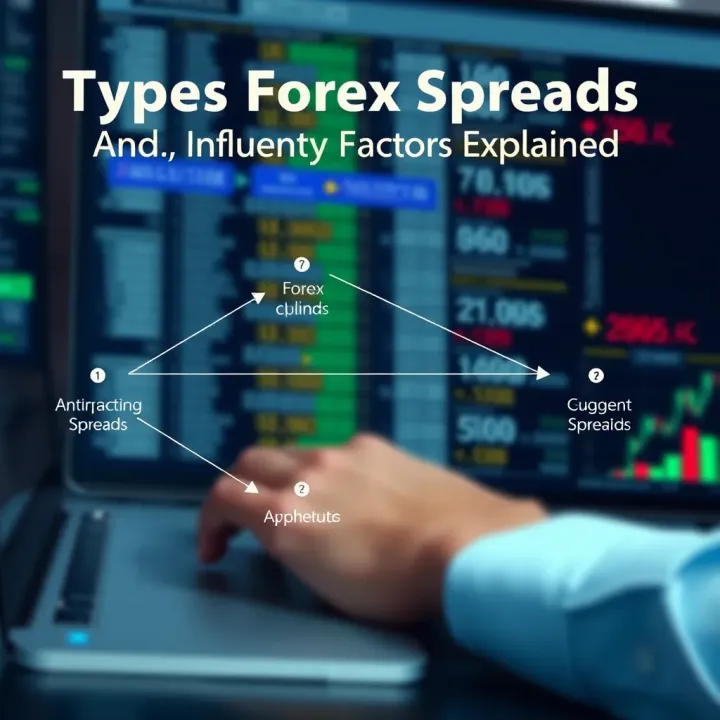
Several factors shape the spreads you’ll encounter in forex trading. Understanding these helps Kenyan traders pick the best times, brokers, and currency pairs to minimise trading costs. Let's take a closer look at the main drivers.
Liquidity is basically how easily a currency pair can be bought or sold without causing big price changes. The more liquidity there is, the narrower the spreads tend to be. For example, major pairs like USD/KES usually have tighter spreads because of frequent trading activity, especially during overlapping market hours such as when London and New York markets are both open.
Meanwhile, in less liquid markets, spreads tend to widen. That’s because fewer buyers and sellers create gaps between the best buy (bid) and sell (ask) prices. For a Kenyan trader, this means it’s often cheaper to trade major pairs during peak hours when the market is more liquid.
When markets get choppy, perhaps due to sudden news like Central Bank of Kenya interest rate decisions, spreads often widen. Volatility causes uncertainty, making brokers cautious by increasing the spread to balance their risk. For instance, during unexpected political events in the region, spreads on currency pairs like USD/ZAR or USD/NGN might balloon.
Traders should be mindful about trading near major news releases or events, as the costs can spike sharply. On the flip side, stable times offer narrower spreads but possibly less opportunity for quick gains.
Market makers create their own prices and may take the opposite side of your trade. They often provide fixed spreads, which can feel predictable but sometimes are a bit wider. For example, a Kenyan trader may find a market maker offering a fixed 3-pip spread on EUR/USD.
On the other hand, Electronic Communication Network (ECN) brokers connect you directly to other traders and liquidity providers. Spreads here tend to be floating and tighter, especially during active trading times, but can widen during low liquidity periods. ECN suits traders who prefer transparent pricing and can manage some unpredictability.
Fixed spreads stay the same regardless of market conditions. They give you certainty about trading costs but can be higher during calm markets. Floating spreads adjust with supply and demand. They typically get very tight when markets are liquid, like during the London session, but may widen sharply during volatile periods.
Choosing between fixed and floating depends on your trading style. If you trade often in volatile markets, floating spreads might save you money on average. If you want to budget your costs strictly, fixed spreads might be easier.
Major pairs, such as EUR/USD, USD/JPY, or GBP/USD, involve currencies from big economies and see high trading volumes daily. Exotic pairs combine a major currency with a less commonly traded currency, like USD/KES or USD/ZAR. Exotic pairs tend to have wider spreads due to lower liquidity.
For example, while the EUR/USD might have a spread under 2 pips, the USD/KES spread could be 10 pips or more, especially outside peak hours. Traders in Kenya need to balance cost against opportunity when choosing pairs.
Pairs with high liquidity usually offer tighter spreads and smoother price movements. Low liquidity pairs, less frequently traded, often experience larger gaps and volatile price swings. This can increase both the cost of trading and the risk involved.
Therefore, trading during times when your chosen currency pair is most active helps both reduce costs and reduce slippage. Kenyan traders who stick to popular times will likely experience tighter spreads, reducing deal expenses and improving overall profitability.
Remember, spreads are not fixed costs but fluctuate based on liquidity, volatility, broker type, and currency pair characteristics. Assessing these will give you an edge in managing forex trading expenses effectively.
Understanding the different types of spreads is key for Kenyan traders aiming to manage costs and risks effectively. The spread you deal with can influence how much you pay per trade and, ultimately, your profitability. There are three common types to recognise: fixed spreads, floating spreads, and commission-based spreads. Each has pros and cons depending on your trading style, market conditions, and broker.
Advantages of Fixed Spreads
Fixed spreads offer the certainty of a constant cost per trade regardless of market movements. This can help traders plan their budgets better since the difference between the bid and ask prices stays the same, even during slow market hours. For example, if a broker sets your spread at 2 pips for EUR/USD, you know that cost upfront without surprises.
When Fixed Spreads Work Best
Fixed spreads are suited for Kenyan traders who prefer predictability, especially those new to forex or who trade during less liquid hours such as the early morning Nairobi time. If you trade mostly during quiet hours when liquidity dips, fixed spreads prevent sudden cost spikes. This stability means you can avoid getting caught in wider spreads that often happen during news releases.
Drawbacks for Volatile Markets
The downside is that fixed spreads often run higher than floating spreads under stable market conditions. Brokers hedge against market volatility by widening fixed spreads, which means you might pay more than necessary when the market is quiet. Also, during fast-moving or volatile hours, the fixed spread might not reflect real market risk, possibly leading brokers to requote or delay orders.
How Floating Spreads Fluctuate
Floating spreads move with market liquidity and volatility. When many traders are active, spreads tighten; during quiet or volatile periods, they widen. For instance, the spread on USD/JPY might narrow to 0.5 pips during London and New York overlap but jump to 3 pips late at night Nairobi time.
Advantages During Stable Markets
Kenyan traders who prefer active, day trading styles may benefit from floating spreads during normal market conditions, as they tend to be lower and cheaper than fixed spreads. This flexibility makes trading less costly if you stick to peak hours such as 4 pm to 11 pm EAT when forex markets overlap.
Risks in High Volatility
However, if you're trading around major economic announcements or unexpected events, floating spreads can widen dramatically. This raises your transaction cost and can increase slippage risk, which might hit your profits hard in short-term trades.
Separating Spread and Commission
Some brokers offer low or zero fixed spreads but charge a commission per trade instead. In this model, the broker clearly shows commission costs separate from the bid-ask spread. This often suits high-volume traders in Kenya, allowing better transparency on trading costs.
Cost Implications for Traders
Commissions may add up depending on trade size and frequency but can result in overall cheaper costs compared to wider spreads. For example, paying a KSh 500 commission per million traded might be preferable to constantly paying 3 to 5 pip spreads on the same trade. Kenyan traders need to compare total costs — combining commissions and spreads — to pick the best option.
Choosing the right spread type depends on your strategy, trading hours, and risk appetite. Fixed spreads offer comfort but might cost more during calm markets. Floating spreads save costs in stable times but bring unpredictability. Commission models provide clarity but require volume to be worthwhile.
Understanding these nuances will help you manage your trades more cost-effectively and suit your trading style well in Kenya’s forex market.
Knowing how to handle spreads effectively can make a difference in your profits, especially when trading currencies from Nairobi or Mombasa. Spreads are part of your trading costs, so managing them well helps retain more of your gains.
Reputation and regulation are key when selecting a broker. In Kenya, traders should prefer firms regulated by strong authorities like the Capital Markets Authority (CMA). A reputable broker with proper regulation protects you against unfair trading terms and shaky spreads. For instance, trading with an unregulated broker may mean facing unexpectedly wide spreads, which can eat into your capital quickly.
Account types also influence spreads. Some brokers offer standard accounts with slightly wider spreads, while others provide premium or ECN accounts where spreads are tighter but may include commissions. Kenyan traders looking to minimise spread costs often benefit from ECN accounts that mirror real market conditions. For example, a standard account might have a fixed spread of 3 pips on USD/KE, while an ECN account could offer spreads as low as 0.5 pips plus a small commission, saving you money on repeated trades.
Understanding market sessions helps reduce spread costs. Forex markets operate 24 hours but liquidity varies. The Nairobi time zone (EAT) overlaps with London’s morning session and New York’s afternoon. This overlap means spreads on popular pairs like EUR/USD tend to be tighter during these hours. Trading outside these periods, such as during the Asian session, usually sees wider spreads due to lower liquidity.
Peak liquidity periods directly affect spreads. When many traders and institutions are active, spreads narrow because there’s more competition for trades. For example, Nairobi traders targeting the GBP/USD or USD/JPY should aim for London/New York session overlaps, roughly 4 pm to 8 pm EAT. During these four hours, tighter spreads can lower your trading costs significantly.
Spread calculators and tracking software can help you keep an eye on costs before and after placing trades. These tools show the exact spread on currency pairs in real time, comparing different brokers or account types. By using platforms that display spreads transparently—like MT4 or MT5—you get a clearer picture of your trading expenses.
Monitoring spreads regularly allows you to make informed decisions. If you notice spreads widening unusually, especially during volatile moments, you might delay trades or adjust your strategy. Being aware of spread behaviour improves your timing and helps protect your profit margins, especially when trading frequently.
Managing spreads is less about luck and more about strategy. Choosing the right broker, trading at busy market times, and using tools to monitor costs are all steps Kenyan traders can take to keep more money in their pockets.
Many Kenyan traders find forex spreads puzzling at first, yet understanding common questions about spreads can make a real difference in how they approach the market. These FAQs address practical concerns, helping traders avoid unnecessary costs and choose strategies that fit their trading style. For instance, knowing whether spreads can be reduced or how they vary among brokers allows you to pick your trades and broker wisely.
Yes, spread costs can often be reduced with the right approach. One practical way is trading during high liquidity periods—such as when the London and New York forex markets overlap—when spreads tend to be tightest. For instance, a trader in Nairobi might prefer trading between 4 pm and 7 pm EAT to catch these times. Another method is choosing brokers that offer lower spreads on major currency pairs like USD/KES or EUR/USD, which are more liquid. Kenyan traders should also consider account types; ECN (Electronic Communications Network) accounts usually offer tighter spreads than standard accounts but may charge commissions instead.
Monitoring the spread regularly helps you spot when it widens due to market volatility or low liquidity, so you can adjust your trades accordingly to save costs.
No, spread offerings vary significantly between brokers, so it isn't one-size-fits-all. Brokers differ by how they source prices, such as market maker brokers who take the other side of your trade and can set fixed spreads, versus ECN brokers who match buyers and sellers with floating spreads. Regulatory environment and operational costs also influence spreads. For example, a well-regulated broker in Kenya like one licensed by the CMA (Capital Markets Authority) might provide more transparent spreads compared to unregulated offshore providers. Kenyan traders should compare spreads on their preferred currency pairs and read reviews or community feedback before settling on a broker.
Spread costs tend to hit short-term traders harder than long-term investors. In scalping or day trading, where you make multiple quick trades, even a slightly wide spread can quickly eat into profits since each trade has to overcome that immediate cost. For example, if the spread on USD/KES is 3 pips, a scalper needs the price to move at least 3 pips in their favour just to break even.
On the other hand, long-term traders who hold positions over days or weeks can absorb wider spreads more comfortably since they focus on larger price movements. That means a spread of 3 pips is minimal compared to the overall gain expected.
Understanding this difference helps Kenyan traders choose trading styles and brokers with spreads that align with their preferred horizons.
By clearing up these FAQs, traders in Kenya stand a better chance at managing their forex spread costs effectively and making smarter choices in the bustling forex market.
Explore how Deriv bots work on the Deriv platform 📊, learn their benefits, risks, and customization to trade smartly and safely in Kenya 🇰🇪.

Learn how to open and fund your Deriv account 🇰🇪, explore key features and safety tips, and start trading confidently on this easy platform 💼📈.

Explore Deriv app features, payment methods, and trading tips for Kenyan traders 🇰🇪. Learn how to trade securely and maximize benefits with ease!
📈 Discover how to trade on Deriv with confidence! Learn account setup, strategies, risk management, and Kenyan regulations in this detailed guide.
Based on 8 reviews