

Understanding Demo Trading Accounts for Kenyan Traders
📊 Discover how demo trading accounts work and why Kenyan traders should use them. Learn tips, benefits, and key differences from live trading for smart decisions.
Edited By
Ethan Clarke
A trading account is your gateway to buying and selling financial assets such as stocks, bonds, and commodities. For Kenyan investors, having a trading account isn’t just a formality; it’s a practical tool enabling participation in the Nairobi Securities Exchange (NSE) and other markets.
Opening a trading account is the first step towards building a portfolio that reflects your financial goals, whether you are a casual investor or an active trader. You can think of it as a specialised bank account that lets you move money in and out to acquire shares or other securities.

Without a trading account, you cannot access market platforms to execute buy or sell orders. It’s the essential link between you and the investment world.
A trading account allows you to:
Place orders to buy or sell shares and bonds
Monitor your asset holdings in real-time
Receive dividends and corporate actions
Transfer funds to and from your linked bank account
For example, if you want to buy shares in Safaricom, you must instruct your broker using your trading account. Your instructions go through this account and link directly to the NSE, making the transaction possible.
There are mainly two types:
Individual trading accounts – Managed solely by you and ideal for personal investment.
Joint or corporate trading accounts – Used for businesses or partnerships wishing to trade collectively.
Brokers registered by the Capital Markets Authority (CMA) will guide you on which account suits your investment strategy. Also, some platforms offer online account opening and management, which adds convenience.
Costs: Trading comes with fees like commission, stamp duty, and account maintenance charges. Be sure to understand these before opening an account.
Broker reliability: Choose a broker regulated by CMA to ensure your investments are secure.
Ease of use: Some platforms integrate M-Pesa payments, making deposits and withdrawals straightforward for Kenyan investors.
In brief, your trading account shapes how easily and cost-effectively you can invest in Kenyan financial markets. Taking time to understand its features keeps you ahead in managing your investments wisely.
A trading account is a specialised financial account that allows investors to buy and sell assets like stocks, bonds, and commodities. Unlike a regular bank account, a trading account connects directly to markets or exchanges where these assets are traded. For example, if you want to invest in Safaricom shares listed on the Nairobi Securities Exchange (NSE), you need a trading account with a registered broker. This account holds your securities, tracks your transactions, and reflects your available funds for trading.
Trading accounts serve as the gateway for active participation in the investment world. They provide the infrastructure to execute trades promptly and safely. Beyond just buying and selling, these accounts help investors keep detailed records of holdings, profits, and losses. For instance, if you decide to sell some shares of Equity Bank, your trading account will facilitate the sale and update your balance accordingly. This makes it easier to monitor your portfolio’s performance and make informed decisions.
Having a trading account is essential because it turns your investment plan into action. Without it, you cannot directly access the markets or manage your investments effectively.
Trading accounts have become increasingly relevant in Kenya as more people seek to grow savings and diversify income sources. Platforms like EABL, KCB, and Bamburi Cement are popular choices for local investors. Moreover, the integration of mobile money services such as M-Pesa with brokerage firms has simplified funding and withdrawals, making investments accessible even outside Nairobi.
With the evolving Kenyan economy and expanding capital markets, these accounts empower everyday Kenyans—from urban professionals to boda boda riders—to invest confidently. They also align with government efforts to promote financial inclusion through technology and regulatory frameworks established by the Capital Markets Authority (CMA). Essentially, trading accounts bridge the gap between ordinary Kenyans and the opportunities available in the NSE and regional markets.
In practice, a well-managed trading account helps you stay in control of your investments, reduce transaction hassles, and respond quickly to market changes. For anyone serious about investing in Kenya, understanding and opening a trading account is the first step towards building financial security.
Understanding how trading accounts operate in Kenya is key for any investor aiming to participate in the local or regional markets. Trading accounts act as a gateway to buying and selling assets like stocks, bonds, or commodities. How these accounts work affects your ability to move money quickly, seize investment opportunities, and manage risk effectively.
At its core, a trading account allows you to hold funds and securities securely while facilitating trades on various platforms. When you place an order to buy or sell shares at the Nairobi Securities Exchange (NSE), for example, the requests are executed through your trading account. Your broker will debit your account for purchases and credit it for sales, reflecting the changes in your portfolio balance.
Typically, the basic operations include depositing funds, placing buy or sell orders, receiving dividends and interest payments, and withdrawing profits. Investors can monitor their portfolio through dashboards provided by brokers, which update in real-time or near real-time. This means you can react swiftly to price fluctuations or news affecting your stocks or bonds.
For example, if you spot a price dip in Safaricom shares, you can fund your trading account and buy immediately, taking advantage of the lower price. Without a properly functioning account, such timely actions would be tough.

In Kenya, convenience and speed matter a lot when it comes to funding and withdrawing from trading accounts. Most brokers allow linking your trading account directly to bank accounts such as those from Equity Bank, KCB, or Co-operative Bank. This integration enables quick electronic transfers, so you can move money without delays.
Mobile money platforms like M-Pesa have become indispensable in this process. Many brokers support M-Pesa payments for funding trading accounts, enabling clients without bank accounts or those who prefer mobile money to participate in investment markets. This setup reduces barriers for first-time investors, especially in towns where bank branches may be sparse.
Withdrawals are often automated as well, where proceeds from sales or dividends can be sent straight back to your M-Pesa wallet or bank account within 24 to 48 hours. This efficiency encourages more active trading and boosts investor confidence.
Having your trading account connected seamlessly to banking and mobile money services is not just a convenience; it’s a necessity in the Kenyan context where cash flow timing can significantly impact investment decisions and returns.
In summary, Kenyan trading accounts facilitate straightforward buying and selling operations supported by seamless payment integrations. Understanding these mechanisms helps investors to trade confidently, tapping into market opportunities quickly without getting bogged down by administrative delays or payment hurdles.
Opening a trading account is the first concrete step towards participating in Kenya’s growing investment scene. Understanding the process makes it easier to navigate regulatory requirements, avoid costly mistakes, and start trading confidently. This section breaks down the key steps you need to follow, with practical tips relevant to Kenyan investors.
Choosing the broker or trading platform is critical, as it affects your access to markets, costs, and the quality of services. Kenyan investors often use firms licensed by the Capital Markets Authority (CMA), which ensures the broker operates under local regulations. Look for brokers that offer accessible platforms compatible with your device and provide good customer support. For instance, Equity Securities and KCB Capital offer well-established brokerage services linked tightly with Kenyan banks, often allowing seamless M-Pesa funding. Also, confirm whether the broker supports the types of assets you want to trade, be it NSE stocks or government bonds.
Don’t rush to pick a platform based solely on flashy adverts; instead, check user reviews and understand their fee structures. Some brokers charge fixed commissions, others percentage-based, and there may be hidden fees for inactivity or withdrawals.
Registering a trading account in Kenya typically requires standard identity verification documents. Expect to provide a valid national ID or passport, proof of residence like a recent utility bill, and a KRA PIN (Kenya Revenue Authority Personal Identification Number). These documents help brokers comply with anti-money laundering rules and confirm account ownership.
The registration process is usually done online via the broker’s website or mobile app. Some brokers might require a physical signature or visit, but most offer quick digital onboarding. For example, it’s common now to upload scanned documents and complete electronic signatures. Once verified, you’ll receive login credentials to access your account.
Tip: Have your KRA PIN up to date in the iTax system to avoid delays during verification.
After registration, the next major step is funding the account so that you can start buying assets. In Kenya, most brokers accept bank transfers from local banks and mobile money payments through M-Pesa. Using M-Pesa is convenient, especially for investors in smaller towns without easy bank access.
Some brokers set minimum deposit amounts; for instance, a minimum of KS0,000 is common to open a trading account with full features. Funding may incur a small transaction fee, so factor this into your planning. Also, keep an eye on deposit processing times, which can range from a few minutes to 1-2 business days.
Regularly review all payment options and confirm which ones your chosen broker supports. This helps avoid surprises during deposit or withdrawal.
Opening a trading account in Kenya doesn’t have to be complex, but being aware of these steps saves you time and frustration. With the right broker, valid documents, and a funded account, you are ready to start engaging with the market safely and effectively.
Choosing the right type of trading account is more than just a paperwork exercise; it shapes how you access markets, manage risk, and grow your investments. Kenyan investors should understand the differences because each account type suits different strategies and cash flow situations. Knowing what each offers helps you avoid surprises like unexpected costs or limits.
Cash accounts are straightforward: you can only trade with the money you have deposited. If you fund your account with KSh 100,000, you cannot buy stocks worth more than that. This suits investors who want to avoid debt and keep control over spending. For example, a Nairobi-based investor buying Safaricom shares may use a cash account to avoid margin calls if the stock drops.
Margin accounts, on the other hand, allow you to borrow money from your broker to buy more shares than your account balance. This can increase profits if the market moves your way, but losses grow quickly if it doesn't. In Kenya, trading on margin may involve additional fees like interest, and you should understand how your stockbroker handles margin requirements. If you’re trying to boost gains cautiously, margins offer flexibility—but you must manage the risk carefully.
Individual accounts belong to one person and are simpler to manage since only you make decisions and provide instructions. This is common for most personal investors in Kenya who trade on NSE (Nairobi Securities Exchange) or regional stocks.
Joint accounts involve two or more people, often spouses or business partners, sharing control. This can help diversify decision-making and pool resources. However, joint accounts require everyone involved to agree on trades, which might slow down decisions. In Kenyan context, families investing together or small businesses using joint accounts often need clear agreements upfront to avoid conflicts.
Some accounts are tailored for particular assets like equities, bonds, foreign exchange, or commodities. For instance, an investor focusing on government bonds might use a specialised account that provides access to Treasury bills and bonds through CBK (Central Bank of Kenya) approved brokers.
Equity trading accounts are popular for shares listed on NSE or cross-listed East African stocks. Meanwhile, forex accounts enable trading in currency pairs, which requires understanding foreign exchange markets and carries high volatility.
Commodity trading accounts, which some brokers allow, give access to gold, oil, or agricultural products popular in local and global markets.
Selecting the right account depends on your investment goals, risk appetite, and the assets you want to trade. Always verify what services and fees come with each type before committing.
Understanding these types helps Kenyan investors pick a trading account aligned with their financial plans, avoiding pitfalls while keeping control over their portfolio.
Understanding the costs and risks involved with trading accounts is vital for Kenyan investors to make informed decisions. Fees can reduce your returns if you’re not careful, while risks can lead to significant losses if left unmanaged. Being aware of these elements helps you plan your investments wisely and avoid unexpected setbacks.
Trading accounts usually come with several charges. The most common include:
Brokerage Fees: This is the commission paid to the broker for executing your trades. For example, a local broker might charge 0.25% per trade, so if you buy stocks worth KS00,000, you pay KS50 as brokerage.
Account Maintenance Fees: Some brokers charge a monthly or annual fee to keep your account active. These can range from KS00 to KS,000 annually.
Withdrawal and Deposit Fees: Depositing funds via bank transfer or M-Pesa is often free, but withdrawing to your bank or mobile money might attract a small fee—often between KS0 and KS00.
Inactivity Charges: If your account remains dormant for long periods, brokers may impose inactivity fees, typically to encourage active trading.
These costs might seem small individually, but they mount up over time. For instance, buying and selling frequently without considering fees can quickly eat into your profits.
Trading inherently carries risks that investors must be prepared for. Key risks include:
Market Volatility: Prices of stocks, bonds, or commodities can swing widely. In Kenya, factors like election cycles, currency fluctuations, or global commodity prices impact markets significantly.
Liquidity Risk: Some securities might be hard to sell quickly without affecting the price, especially on smaller exchanges or for less popular stocks.
Fraud and Scams: The rise of online trading platforms in Kenya comes with increased chances of fraud. Always verify that your broker is licensed by the Capital Markets Authority (CMA).
Technical Failures: Downtime, internet issues, or faulty software can disrupt trades, leading to missed opportunities or losses.
To manage these risks:
Diversify your portfolio across different asset classes and sectors.
Use stop-loss orders to limit potential losses.
Trade through regulated brokers to reduce fraud risk.
Keep up-to-date with market news and local economic factors.
Regularly reviewing fees and understanding risk factors can save you KSh thousands and protect your investments from avoidable losses.
By recognising these costs and risks, Kenyan investors can approach trading accounts with greater confidence, making sure their money works hard and smart in the market.
Keeping your trading account in good shape is key to making the most of your investments and avoiding unnecessary losses. Proper management helps you stay in control, spot opportunities early, and adjust your strategies as market conditions shift. For Kenyan investors, this means regularly reviewing your portfolio, using available digital tools wisely, and understanding tax rules to steer clear of surprises.
Regularly checking your trading account isn't just about knowing your current balances; it’s about understanding how your assets are performing and making informed decisions based on that. Set a routine to review your account weekly or biweekly, depending on how active you are. Use this time to track price movements, dividends, or interest payments. For example, if you hold Safaricom shares, watch market news that could affect their prices, like quarterly earnings or regulatory changes.
Also, keep an eye on your transaction costs and fees, which can eat into profits if unchecked. Make notes of any unusual activity and immediately report it to your broker. Regular monitoring helps prevent situations where small losses grow unnoticed into big problems.
Digital platforms have transformed trading in Kenya. Most brokers now offer mobile apps and web portals that make buying and selling simple and quick. Many apps provide real-time price alerts, charting tools, and portfolio summaries. Using these can save you time and give a clearer picture of your investments.
For instance, tools like the NSE mobile app or brokers such as EABL's trading platform enable swift trades and instant fund transfers via M-Pesa. Automating certain functions, like setting stop-loss orders, can protect you by selling a share automatically when it drops below a set price. This reduces emotional trading, which often leads to losses.
However, it’s vital to stay secure. Always protect your account with strong passwords and two-factor authentication to avoid scams or unauthorised access.
Taxes can significantly affect your net gains from trading. In Kenya, capital gains tax (CGT) stands at 5% on profits from selling shares or other securities, effective since 1 January 2015. This means if you sell Nakumatt shares with a profit of KSh 100,000, you owe KSh 5,000 in CGT.
Dividends are also taxable and usually subjected to withholding tax at the time of payment. Some brokers provide tax statements to help you declare your earnings correctly during revenue authority assessments.
Keep detailed records of your trades, dividends, and brokerage fees. This documentation will be crucial when filing your income tax return through the Kenya Revenue Authority (KRA) portal or seeking advice from a tax expert. Understanding these tax rules helps you plan transactions better and avoid penalties.
Managing your trading account effectively is a continuous effort that blends vigilance, technology, and awareness of legal duties. Kenyan investors who stay sharp in these areas improve their chances of building sustainable wealth in the market.
📊 Discover how demo trading accounts work and why Kenyan traders should use them. Learn tips, benefits, and key differences from live trading for smart decisions.

Explore how demo accounts help Kenyan traders practice risk-free, learn market basics, and master trading before moving to live markets 📊💡
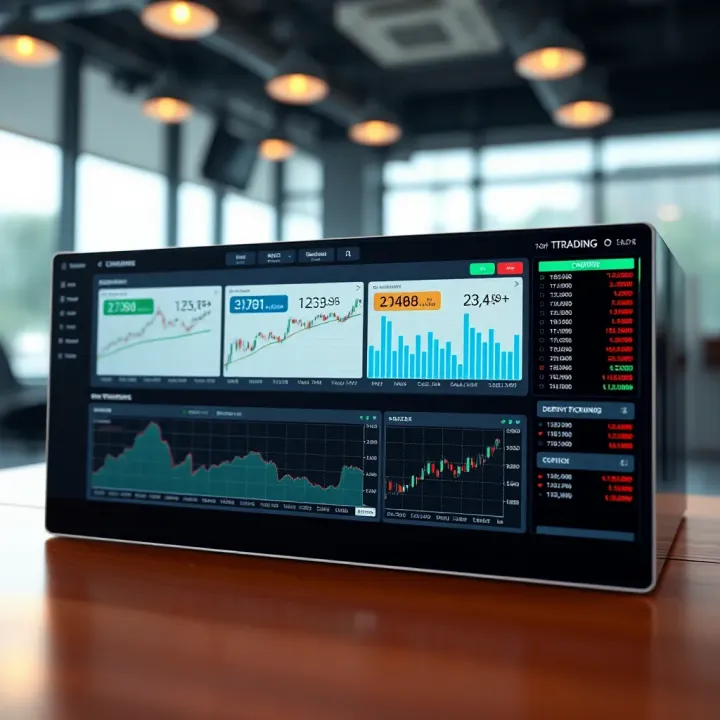
📈 Discover how to trade on Deriv with confidence! Learn account setup, strategies, risk management, and Kenyan regulations in this detailed guide.

📈 Learn about derivative trading in Kenya: types, risks, and strategies to manage assets like stocks, commodities, and currencies confidently.
Based on 8 reviews