
CFD Trading Guide for Kenyan Investors
Explore CFD trading in Kenya 🇰🇪 with this practical guide: learn how it works, key strategies, market access, risks, and tips to trade smarter 📈.
Edited By
James Thornton
Trading charts are essential tools for investors and traders looking to understand market behaviour. In Kenya's growing investment scene, many rely on these charts to make informed decisions on shares, forex, and commodities. Knowing how to read trading charts gives you a solid edge, whether trading at the Nairobi Securities Exchange (NSE) or venturing into global markets.
At their core, trading charts display price movements over time. They help reveal patterns, trends, and market sentiment that raw numbers alone could miss. Common types include line charts, bar charts, and candlestick charts — each offering a different way to visualise price action.

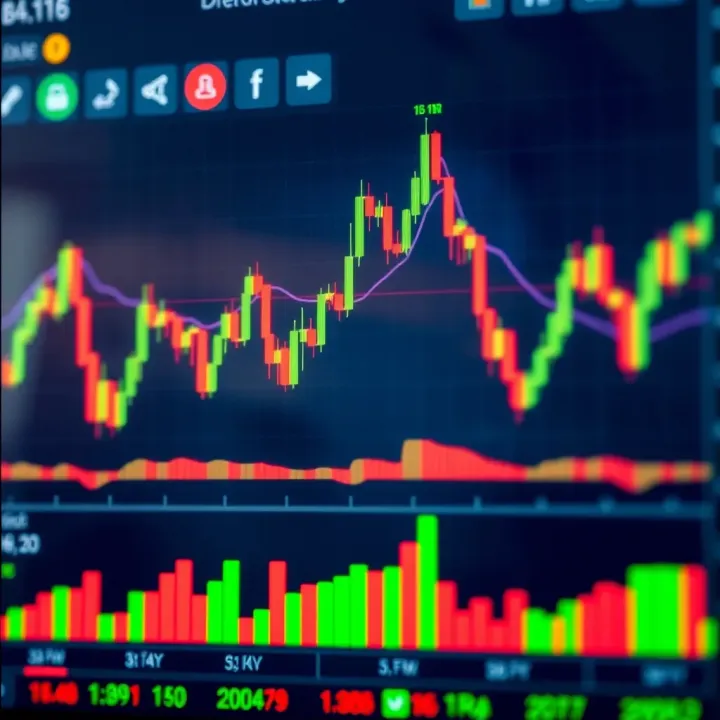
For instance, candlestick charts are widely popular among Kenyan traders because they provide clear insights into opening, closing, high, and low prices within a given period. A green candle often signals a price rise, while a red one indicates a fall. Spotting clusters of these candles can hint at strong buying or selling pressure.
Understanding price movement on charts helps avoid rash decisions like panic selling or overbuying, which are common mistakes among new investors.
Besides price data, investors typically add technical indicators like moving averages or the Relative Strength Index (RSI) to help confirm trends or spot reversals. Moving averages smooth out price fluctuations so you can better identify the general direction. The RSI measures how overbought or oversold an asset is and can warn of a possible upcoming correction.
Kenyan investors should also be aware of peculiar market factors that can affect price action, such as low liquidity on some stocks, local economic news, or political developments. Using charts alongside fundamental analysis and staying updated with news from sources like the Business Daily or Capital FM will improve your trading decisions.
To get started, choose a trusted platform offering charting tools, like NSE’s online portal or brokerage platforms that provide live data and flexible chart options. Practise by observing charts of popular Kenyan stocks like Safaricom, Equity Bank, or KCB to understand their typical price patterns.
In summary, mastering trading charts requires more than just looking at colourful lines. It’s about learning to interpret what price patterns and indicators convey, staying alert to local and international influences, and practising consistently over time.
In the following sections, we will explore the main chart types, essential indicators, and practical tips for Kenyan investors to sharpen their chart-reading skills without getting caught in common traps.
Trading charts are the foundation of any serious investor's toolkit. They provide a visual representation of how a financial asset's price moves over time, helping investors spot trends, understand market behaviours, and make informed decisions. For Kenyan investors, mastering these basics is particularly helpful given the volatility often experienced in markets like the Nairobi Securities Exchange (NSE) and forex.
At their core, trading charts show the past price data of an asset such as shares, forex pairs, or commodities. They condense complex market movements into a clear visual format. Imagine trying to follow a matatu’s route using just written instructions versus watching a map; charts serve as that map for price action.
Rather than guessing where prices might head next, charts let you identify patterns or signals based on historical behaviour, turning raw numbers into actionable insights.
Candlestick charts are widely used because they offer detailed information about price movements within a specific timeframe. Each candlestick reflects the opening, closing, highest, and lowest prices during that period. For example, a green candle often shows that the price closed higher than it opened, signalling buying pressure, while a red candle indicates selling pressure.
In Kenya’s markets, candlesticks are especially valuable for short-term traders watching volatile stocks or forex pairs. They reveal market sentiment clearly and can highlight quick reversals or strong trends better than other chart types.
Line charts are the simplest, connecting closing prices over time with a continuous line. They strip away the noise of intra-day fluctuations and focus on the overall price direction. For a Kenyan long-term investor tracking blue-chip stocks like Safaricom or Equity Bank, line charts provide an easy way to monitor general trends without getting distracted by daily price swings.
While they lack the detail candlesticks present, line charts are good for spotting broad market movements at a glance.
Bar charts also show the opening, closing, high, and low prices, but use vertical bars with ticks to the left and right to mark opening and closing prices respectively. They’re a middle ground between candlesticks and line charts.
Some Kenyan traders prefer bar charts when they want detailed price range data without the more colourful visuals of candlesticks. It helps especially in technical analysis where precise price points aid pattern recognition.
Choosing the right timeframe is key in reading charts effectively. Timeframes can range from one-minute intervals to daily, weekly, or even monthly views. Intraday traders in Nairobi’s fast-moving market might focus on 5- or 15-minute charts to catch quick moves. Meanwhile, a pension fund manager assessing NSE stocks for long-term growth might prioritise weekly or monthly charts.
Using appropriate timeframes prevents confusion. For example, a stock might appear to be in an uptrend on a daily chart but show sideways movement on a weekly chart. Knowing this gives you better insight into when to enter or exit a trade.
Trading charts are much like a window into market psychology; understanding their basics lets you see beyond numbers to patterns and sentiment that drive price movements.
By mastering these fundamentals, Kenyan investors can navigate local and global markets with more confidence, supported by clear, reliable data visualisation.
Understanding key chart patterns is essential for traders and investors in Kenya’s financial markets. These patterns offer visual cues about price movements, helping you make more informed decisions whether you're trading NSE equities, forex, or commodities. Recognising these patterns early can improve your timing for entry and exit points, reducing risks and increasing potential profits.
Trends indicate the general direction of prices over time. An uptrend shows rising prices where each peak and trough is higher than the previous one. In contrast, a downtrend features falling prices with lower highs and lows. Sideways movements occur when prices hover within a range, neither rising nor falling significantly. Knowing which trend is dominant can guide your strategy — for example, buying on dips during an uptrend or selling on rallies in a downtrend.
The head and shoulders pattern signals a potential trend reversal and is widely watched by traders. It consists of three peaks: the middle peak (head) is the highest, flanked by two smaller peaks (shoulders). When the price breaks below the neckline—a support level drawn between the two shoulders—it often signals a shift from an uptrend to a downtrend. Kenyan investors may spot this pattern when trading blue-chip stocks listed on NSE, using it as a caution to tighten stop-loss orders or prepare to exit.
Double tops and bottoms represent strong reversals in price trends. A double top forms when prices hit a resistance level twice but fail to break through, indicating sellers are strong enough to push prices down. Conversely, a double bottom forms when prices drop to a support level twice and fail to go lower, hinting at buying strength and a possible upward move. Both patterns help traders anticipate trend shifts and adjust their positions accordingly.
Flags and pennants are short consolidation phases that appear after sharp price moves, signalling the trend is likely to continue. Flags look like small rectangles slanting against the prevailing trend, while pennants resemble small triangles tightening sideways. For instance, after a rapid increase in a forex pair like USD/KES, a flag may form before the price continues climbing. Noticing these can give you confidence to stay in the trade rather than exiting prematurely.
Triangles occur when price movements narrow between converging trendlines. There are three types: ascending, descending, and symmetrical. An ascending triangle usually signals bullish continuation, descending suggests bearish continuation, and symmetrical can break out in either direction. Understanding these can help you set clear entry points; for example, breaking above the upper trendline in an ascending triangle might be your signal to buy.
Recognising chart patterns offers you a toolkit for reading market psychology and price action. In the Kenyan market, where external factors like currency fluctuations or political events influence prices, these patterns become even more valuable indicators to guide your trading moves with confidence.
Technical indicators are essential tools that help Kenyan investors make better sense of trading charts. They provide additional layers of insight by analysing price data mathematically, helping you spot trends, gauge momentum, and confirm signals for buying or selling. Relying on raw price movements alone can mislead, so combining charts with indicators sharpens your decision-making.
Indicators like moving averages and momentum oscillators are especially useful in the Nairobi Securities Exchange (NSE) or forex markets. They smooth out the ‘noise’ of short-term price swings, making it easier to identify reliable trends or reversals. For example, during volatile sessions affected by local news — say an interest rate change by the Central Bank of Kenya (CBK) — indicators can help cut through unpredictability.
The Simple Moving Average (SMA) works by calculating the average price over a set period, such as 20 or 50 days, and plots this as a line on your chart. This line helps reveal the overall direction of a stock or commodity’s price. In practical terms, if the price stays above the SMA, the trend is generally upwards. Conversely, if the price falls below the SMA, it signals a possible downtrend.
For a Kenyan investor tracking a stock like Safaricom, a 50-day SMA shows the medium-term trend, giving you a straightforward way to avoid reacting to daily price swings. Watching how the actual price crosses the SMA can alert you to potential entry or exit points, making SMA a straightforward but powerful tool.
The Exponential Moving Average (EMA) is similar to the SMA but reacts faster to recent price changes. It gives more weight to the latest prices, which makes it handy for traders who want timely signals. For instance, when trading foreign exchange pairs like USD/KES, EMA can respond quickly to global events affecting currency values.
In practice, an EMA crossover system is useful — if a short-term EMA (say 10 days) crosses above a longer-term EMA (like 50 days), it can suggest a buying opportunity. Kenyan traders often use this strategy for NSE equities or forex to catch early trend shifts without waiting too long.
RSI measures the speed and change of price movements on a scale from 0 to 100. Typically, readings above 70 indicate an asset may be overbought and due for a price correction, while readings below 30 suggest oversold conditions and possible rebound. This helps investors avoid buying at inflated levels or selling too soon.
For example, during a frenzy in the Kenyan stock market, RSI helps identify when Safaricom’s share price might be stretched too far, prompting investors to reassess their positions. In forex trading, RSI can warn against entering a position just as the currency becomes overbought.
MACD is a trend-following momentum indicator showing the relationship between two EMAs, often 12-day and 26-day periods. It consists of a MACD line, a signal line, and a histogram. When the MACD crosses above the signal line, it may signal upward momentum, and crossing below suggests downward momentum.
For Kenyan traders, MACD is useful alongside volume data to confirm if a breakout in NSE stocks is strong or a false alarm. It can also be applied when trading commodities like tea or coffee futures, signalling potential reversals or continuation of trends.
Volume represents the number of shares or contracts traded during a specific period. It’s crucial because price moves backed by high volume tend to be more reliable. Without volume, price changes may lack conviction.
In Kenya’s markets, watching volume can prevent falling for false breakouts. For instance, a sharp rise in the price of an NSE-listed company accompanied by rising volume confirms genuine interest, possibly signalling a smart buy. On the other hand, price changes on thin volume warn caution.
Combining technical indicators with trading charts is about finding confirmations. One signal alone rarely tells the whole story. Kenyan investors should use these tools together, backed with wider market understanding, to increase their chances of success.
Trading charts offer Kenyan investors practical tools to navigate local and international markets effectively. They help make sense of price movements and market trends in real-time, whether it’s buying shares on the Nairobi Securities Exchange (NSE), trading forex, or investing in commodities. Understanding how to read and apply these charts gives traders an edge in timing their entry and exit points, which can greatly affect returns.
When trading NSE equities or exchange-traded funds (ETFs), charts reveal patterns that reflect investor behaviour and market sentiment specific to Kenya. For example, tracking the price movement of Safaricom shares over days or weeks helps investors identify trends during the quarterly earnings releases or major events like changes in dividend policies. ETFs that track sectors such as banking or agriculture respond to local economic conditions; charting their performance aids in spotting sectoral shifts early. Using moving averages and volume indicators in these charts offers signals about potential price breakouts or reversals.
Forex trading in Kenya often involves major pairs like USD/KES due to their impact on import-export businesses and remittance flows. Charts showing currency movement are essential for anticipating shifts driven by factors such as CBK’s monetary policy decisions or global dollar strength. Similarly, commodities like tea, coffee, or oil have active markets where chart analysis helps traders understand price volatility influenced by seasonal harvests or geopolitical issues. Recognising candlestick patterns and momentum indicators on these charts informs better decisions for short-term trading or hedging.
M-Pesa’s widespread use in Kenya enables traders to quickly fund accounts, access data, and execute trades on mobile platforms. Some trading apps integrate real-time chart data with mobile money services, allowing instant transactions influenced by price alerts or market news. With mobile internet improving across urban and rural areas, investors can perform technical analysis on the move, responding faster to market signals. This convenience is crucial in volatile times, for example when reacting to unexpected market news or political events.
Effective use of trading charts combined with mobile technology and local market knowledge can transform how Kenyan investors manage risk and seize opportunities. Charts are not just for experts; with proper understanding, anyone can apply them to make smarter trades in NSE equities, forex, or commodities.
By tailoring trading charts to local market realities and leveraging mobile tools, Kenyan investors get a better grip on their investments and improve chances of success in both local and global markets.
Many Kenyan investors dive into trading charts without recognising common pitfalls that can cost them money. Understanding and avoiding these mistakes sharpens your trading edge and reduces unnecessary losses. Here, we highlight three frequent errors and how to steer clear of them.
Indicators like the Relative Strength Index (RSI) or Moving Averages (SMA and EMA) are popular tools in chart analysis. However, leaning too much on indicators without considering the actual price movement often clouds judgement. For instance, an RSI showing ‘overbought’ conditions does not always mean the price will drop immediately. The broader price trend and support or resistance levels around it tell a fuller story. Kenyan investors trading NSE shares or forex pairs should integrate price action with indicators, not use one in isolation. Combining these elements helps avoid false signals that otherwise lead to poor timing of buy or sell decisions.
Charts tell you what has happened but miss why it happened. Ignoring significant news, like changes in Kenya’s Central Bank Monetary Policy Committee (MPC) decisions, can lead traders astray. For example, when CBK announces a change in interest rates, it often moves the NSE or forex markets. Investors relying solely on charts may miss quick reversals or volatility triggered by such events. Similarly, company earnings reports or political developments in Kenya affect share prices beyond chart patterns. Monitoring local and global news alongside your charts ensures a broader perspective and reduces surprises.
Picking the wrong chart timeframe can confuse signals and harm decision-making. Nairobi investors tend to use short timeframes like 5 or 15 minutes when day trading, but applying these for long-term investments in NSE equities can cause unnecessary stress and noise. Conversely, using daily or weekly charts for quick trades might lead to missed opportunities or late entries. Selecting a timeframe depends on your trading style and goals. If you’re a swing trader, daily charts give enough detail without the chatter seen in minute charts. For active forex traders, shorter timeframes capture rapid price moves. Always align your timeframe with your strategy and avoid switching too often, which can trigger overtrading.
Avoiding these mistakes isn’t just about better charts; it’s about developing sound trading habits shaped by awareness of both technical and real-world factors.
Balance indicators with price action to interpret charts fully.
Stay updated with market news, especially local economic events and company reports.
Use timeframes that suit your trading style—avoid jumping between unrelated views.
By addressing these common errors, Kenyan investors improve their chances in the sometimes unpredictable trading environment, making their chart analysis more valuable and reliable.
Explore CFD trading in Kenya 🇰🇪 with this practical guide: learn how it works, key strategies, market access, risks, and tips to trade smarter 📈.

📈 Learn how to read candlestick charts for smarter trading decisions. Discover key patterns, history, pros, and cons in financial markets analysis.
📊 Understand binary charts—how they're built, used in computing, data visualization, and tips for reading and creating them effectively in real-world cases.
📈 Discover how to trade on Deriv with confidence! Learn account setup, strategies, risk management, and Kenyan regulations in this detailed guide.
Based on 15 reviews