
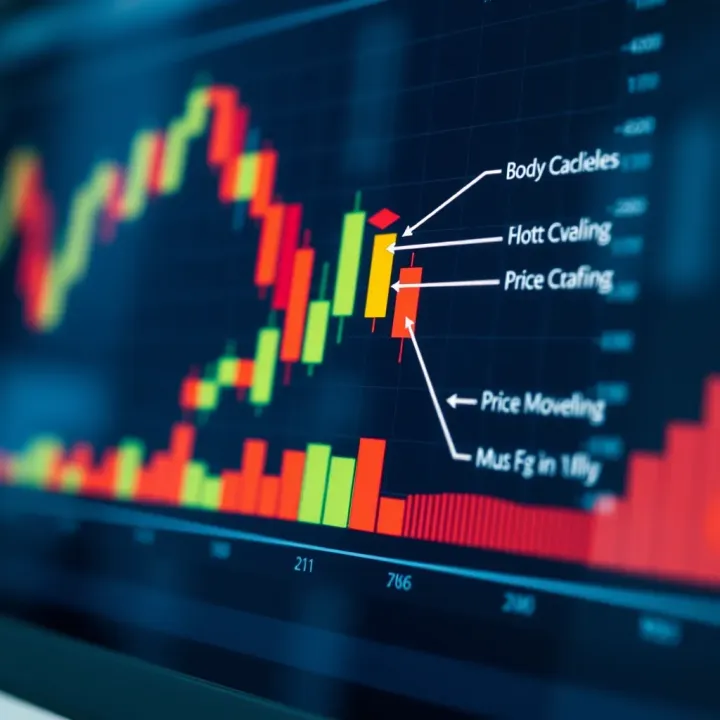
Understanding Candlestick Charts in Trading
📈 Learn how to read candlestick charts for smarter trading decisions. Discover key patterns, history, pros, and cons in financial markets analysis.
Edited By
Richard Dawson
Volatility indices offer a quick snapshot of how much price changes investors expect in a market over a set time. Think of them as a weather forecast, but instead of predicting rain or shine, they give a hint on market turbulence. This helps traders and investors gauge risk — especially when markets feel unpredictable.
One of the most famous examples is the VIX index, which reflects expected volatility on the US S&P 500 index. Although based on the US market, similar indices exist globally, with local markets developing their own versions or relying on international benchmarks.

In Kenya, investors can watch global volatility to assess potential shocks that might ripple into local markets. Kenyan equities and currency often react to global risk sentiment, so awareness of volatility shifts abroad is useful. For instance, a sudden spike in the VIX might indicate increased nervousness that could impact NSE stocks or the shilling’s value.
Volatility indices summarise market expectations about price swings rather than direction. They don’t predict if prices will rise or fall but estimate how wildly prices might jump. Higher values point to bigger expected moves, signalling more investor worry, while lower values suggest calm.
These indices are calculated using option prices, which embed the market’s view on future uncertainty. Because options allow traders to hedge or speculate on price moves, their cost reflects expected volatility.
Volatility indices act not as trading signals on their own but as gauges of risk appetite and potential market stress.
Risk management: Investors use volatility indices to decide when to protect portfolios with hedges.
Market timing: Sudden jumps in volatility might prompt traders to adjust positions or stay cautious.
Product pricing: Financial instruments such as options and futures are priced using volatility assumptions tied to these indices.
Understanding volatility indices equips investors and traders in Kenya to better read market mood globally and locally, helping them make smarter decisions under uncertainty.
Volatility indices serve as barometers of market mood, measuring how much price swings investors expect over a certain period. For traders and investors in Kenya and beyond, these indices offer valuable clues about market uncertainty and risk levels. By understanding their signals, you can better plan when to enter or exit investments or hedge against potential losses.
A volatility index quantifies the expected fluctuations in price of a particular market or asset over a short time—usually around 30 days. Rather than tracking actual price changes, it estimates future volatility, often derived from option prices, which reflect traders’ expectations. The most recognised example is the VIX, also known as the “fear gauge,” which measures expected volatility of the S&P 500 index in the United States. In Kenya, the NSE Volatility Index provides a similar glimpse into the Nairobi Securities Exchange’s expected price swings.
Unlike simple price indices that show where prices currently are, volatility indices give insight into how wildly prices might move. For example, a VIX reading above 30 often points to high uncertainty or fear in the market, while readings below 20 suggest relative calm. This numeric scale helps investors gauge risk appetite quickly.
Volatility indices indirectly reveal how investors feel about the market’s near-term future. High expected volatility tends to signal nervousness or concern about upcoming events — perhaps economic reports, political developments, or shocks like commodity price swings. Conversely, low volatility suggests confidence or stability.
Consider the Kenyan market during election periods or global shocks like the COVID-19 pandemic. Volatility indices spike as many market players try to price in uncertain outcomes, hedging aggressively or pulling back from risky assets. Once uncertainty fades, the indices fall back, signalling calmer waters.
For practical use, traders often track these indices alongside market prices. If the NSE Volatility Index rises sharply while equities drop, it may warn of growing risk ahead, prompting portfolio adjustments like buying protective options. On the flip side, low volatility periods can encourage more aggressive investing, since risks appear manageable.
Volatility indices don’t predict exact market moves, but they do highlight how jittery or confident investors feel — a crucial insight when markets get choppy.
By grasping what volatility indices measure and how to interpret their swings, Kenyan investors, brokers, and fintech experts can sharpen their market strategies. These indices complement price data with a fresh layer of information about market psychology, helping to make smarter, more informed decisions.
Understanding how volatility indices are calculated is key for investors and traders who rely on them for decision-making. These indices don’t just appear out of thin air; they are derived from market data, especially options prices which encapsulate market expectations about future price swings. The reliability of a volatility index depends on the accuracy of its computation method and the quality of its data sources.

Options prices play a central role in calculating volatility indices. Options give traders the right, but not the obligation, to buy or sell an asset at a set price before a certain date. Since options' values depend heavily on expected price fluctuations, they serve as a natural source of implied volatility data. For example, the CBOE Volatility Index (VIX) extracts expected volatility from the S&P 500 index options. By observing how expensive or cheap these options trade, it estimates the market’s forecast for volatility over the next 30 days.
This approach reflects real-time market sentiment and expectations rather than past price movement. In the Kenyan market, rising activity and availability of options on equities at the Nairobi Securities Exchange (NSE) could, in future, feed similar volatility calculations designed for local investors. For now, global volatility indices influenced by international options markets still guide Kenyan traders on global risk levels.
Several models exist to turn options data into a volatility index. The most common is a weighted average formula that considers a range of strike prices for options expiring soon. This approach ensures the index reflects broad market expectations rather than just a single price point.
One widely used formula for calculating volatility indices like the VIX utilises a combination of call and put options at different strike prices. It involves computing the expected variance—the square of volatility—over a specified future period. This variance is annualised and then converted to the volatility index level, often expressed as a percentage.
For example, the VIX calculation takes prices of near- and next-term options to measure expected volatility for the coming 30 days. This method avoids relying on forecasts or historical volatility exclusively, giving an up-to-date picture of market concerns.
Besides the VIX methodology, other models such as GARCH (Generalised Autoregressive Conditional Heteroskedasticity) also estimate volatility by analysing historical price changes. However, implied volatility from options remains the preferred source for indices because it captures forward-looking expectations.
Volatility indices are essential tools for investors and traders aiming to understand risk and market sentiment in various financial environments. These indices offer a snapshot of the expected fluctuations, making it easier to anticipate potential market moves. Different markets have their own key volatility indicators, reflecting local trading dynamics and economic conditions. Being aware of these helps you to make better-informed decisions whether you trade equities, commodities, or derivatives locally or internationally.
The VIX, often called the “fear gauge,” measures the expected volatility of the S&P 500 index over the next 30 days. It is derived from options prices and shows how much traders expect the market to fluctuate. When the VIX spikes, it usually signals increased fear or uncertainty in global markets. For Kenyan investors who trade US-listed securities or track global market trends, the VIX is a critical indicator. For instance, during global shocks such as the 2020 COVID-19 outbreak, the VIX surged sharply, alerting investors worldwide to heightened risk.
Investors in Kenya can use the VIX as a benchmark for global risk appetite. If the VIX is elevated, risk assets may be more volatile, suggesting a more cautious approach might be needed in their portfolios. Conversely, a low VIX often suggests calmer markets and may signal opportunities to increase risk exposure.
The VSTOXX measures expected volatility in the Euro Stoxx 50 index, which tracks major European companies. It’s similar to the VIX but geared toward Europe’s market environment. This index is useful for investors with exposure to European stocks or with interests in economic developments in countries within the European Union.
Given Kenya’s growing trading links with Europe, and through multinational corporations listed in both markets, VSTOXX readings provide insight into economic risks beyond local shores. For example, geopolitical tensions or EU policy changes can push the VSTOXX higher, hinting at potential turbulence that could ripple into emerging markets like Kenya’s.
The Nairobi Securities Exchange (NSE) Volatility Index gauges the expected price swings in Kenya’s market, reflecting local investor sentiment. Its calculations are based on options prices of NSE25 or NSE20 equities, which represent the largest companies listed. This index gives a direct signal of how volatile the Kenyan market might be over a short period.
For local traders and portfolio managers, the NSE Volatility Index is invaluable. It helps to time entries or exits by signalling periods of market stress or calm. For example, during times of political uncertainty or significant economic announcements, this index often spikes, showing heightened investor caution.
South Africa’s Johannesburg Stock Exchange (JSE) hosts the South African Volatility Index (SAVI), which acts similarly within its market. Other African exchanges are developing their own volatility measures to help local investors understand market risks better.
These indices are particularly practical for pan-African investors or fund managers who operate across several bourses. By comparing volatility levels across markets, they can allocate risk more effectively and anticipate regional contagion effects. For Kenyan investors, keeping an eye on the JSE’s SAVI can be important, as South Africa’s market movements often influence the broader SADC region.
Volatility indices, whether global or local, serve as crucial tools to read the market’s pulse. They empower investors and traders with timely signals for risk management and strategic decision-making.
Understanding the distinct features of each index and how they tie into local and global events gives you an edge. In Kenya’s vibrant financial market, knowing when to watch these indices can be the difference between protecting capital and missing out on profitable opportunities.
Volatility indices serve as vital tools for understanding market risk and guiding investment decisions. They provide a snapshot of expected market turbulence over a set period, enabling traders and investors to adjust their strategies accordingly. In Kenya and beyond, these indices help strike a balance between taking advantage of opportunities and protecting capital amid uncertain conditions.
Volatility indices act like a thermometer for market anxiety. When these indices spike, it signals increasing uncertainty or potential downturns, prompting investors to be more cautious. For example, a sudden rise in the NSE Volatility Index might warn Kenyan investors of heightened risk, encouraging them to review their portfolios or increase liquidity.
These indices also help gauge the broader economic climate. During political elections, or periods of global shocks such as oil price disruptions, volatility indices often jump. This reaction reflects the market’s anticipation of price swings and guides risk managers in adjusting their exposure. Simply put, volatility indices offer a quantifiable measure of market risk that is hard to ignore.
Hedging Strategies
Traders and portfolio managers often use volatility data to design hedging strategies that cushion potential losses. For instance, if volatility indices indicate a coming storm, they may buy put options or inverse exchange-traded funds (ETFs) to protect their positions. In Kenya, this might involve securing contracts on equities listed on the NSE or commodities sensitive to global price shifts.
Hedging is about buying insurance against market unpredictability. Without the guidance of volatility indices, these protective moves could be mistimed or unnecessary, leading to avoidable costs. By tracking volatility, investors can strike the right balance between growth and defence.
Timing Market Entry and Exit
Volatility indices also help traders decide when to jump into or exit the market. Elevated volatility often points to higher risk but also bigger reward potential, ideal for aggressive traders ready to capitalise on price swings. Conversely, when volatility is low, markets tend to be calmer but with fewer quick gains; more risk-averse investors may prefer this quieter environment.
Consider a Kenyan investor watching the VIX (the Chicago Board Options Exchange Volatility Index) as a reference for global equity swings. A sharp rise might suggest delaying new purchases until the market stabilises. Meanwhile, local players tracking the NSE Volatility Index can spot similar signals, adjusting their timing to reduce losses or secure profit.
Overall, volatility indices convert market jitters into actionable insight. They don’t predict exact movements but flag when investors should tighten risk controls or prepare for opportunity.
Understanding these practical uses helps investors, traders, and portfolio managers in Kenya make better-informed decisions, managing risks with confidence and seizing moments when markets swing. Using these tools wisely can improve portfolio resilience and long-term performance.
Volatility indices offer valuable insights into expected market fluctuations, but they are not foolproof. Understanding their limitations is essential for traders, investors, and analysts who use them for decision-making. Without this awareness, one risks over-relying on volatility data, which may lead to misjudged market positions or unexpected losses.
Volatility indices often reflect market expectations of future price swings, but these are not certainties. For example, high volatility readings sometimes get mistaken for impending market crashes. However, elevated volatility can also arise from normal fluctuations or react to news whose impact might fade quickly. In Kenya, during the 2020 COVID-19 market shock, volatility surged sharply on the NSE, signalling fear — yet markets stabilised sooner than some had feared.
Another common misunderstanding is treating low volatility as a signal of safety. Low volatility periods sometimes precede sudden market jolts, as calm markets can lull investors into complacency. Therefore, volatility indices should be paired with other market indicators and not be viewed in isolation.
While these indices measure market expectations, they cannot foresee all types of shocks. Some events, like geopolitical crises or sudden regulatory changes in major economies, happen unexpectedly and can disrupt markets before volatility rises visibly. For instance, the NSE Volatility Index may not capture a swift policy announcement from Nairobi or abrupt regional political unrest until after markets start reacting.
Natural disasters or global supply chain disruptions also fall outside what volatility indices predict directly. These can cause sudden price movements that catch investors off guard. In the Kenyan context, disruptions in fuel supply due to port congestion often cause swift market jitters, yet volatility indicators may lag in reflecting this.
Investors should view volatility indices as tools to supplement their market analysis, not crystal balls. Relying solely on them without considering broader economic, political, and social factors can expose portfolios to risks.
In summary, volatility indices are practical guides for gauging market sentiment and risk but come with blind spots. Recognising potential misinterpretations and being aware of event types that volatility indices may miss will help Kenyan investors and traders make better-informed decisions while navigating local and global financial markets.
📈 Learn how to read candlestick charts for smarter trading decisions. Discover key patterns, history, pros, and cons in financial markets analysis.

Explore Deriv Com's user-friendly interface 🔍, diverse financial instruments 📊, secure accounts 🔒, and advanced trading tools to trade confidently in Kenya.

Discover the world of deri 👜 in Kenya – its types, crafting methods, daily uses, cultural roots, and impact on local trade and economy.
📊 Discover how derivatives work in calculus & finance with clear examples. Understand their role in academics and real-world use in Kenya and beyond.
Based on 7 reviews