
Understanding TradingView for Kenyan Traders
📈 Discover how TradingView helps Kenyan traders with real-time charts, data, and insights. Learn practical setup tips to match Kenya's trading needs and grow your portfolio.
Edited By
Isabella Turner
The Finviz Currency Strength Meter is a handy tool designed to give traders and investors a quick snapshot of how different currencies are performing against one another in the forex market. Instead of sorting through piles of data or spending hours analysing charts, this meter delivers real-time updates on currency strength, helping users make better decisions faster.
By displaying the relative strength of major and emerging market currencies on a single screen, the tool simplifies the complex world of forex trading. This is particularly useful for Kenyan traders and businesses who face daily foreign exchange challenges, such as importing goods or dealing with cross-border payments. For example, a Kenyan exporter paid in US dollars can use the meter to monitor when the USD is gaining strength against the Kenyan Shilling (KES), potentially maximizing returns when converting earnings back home.
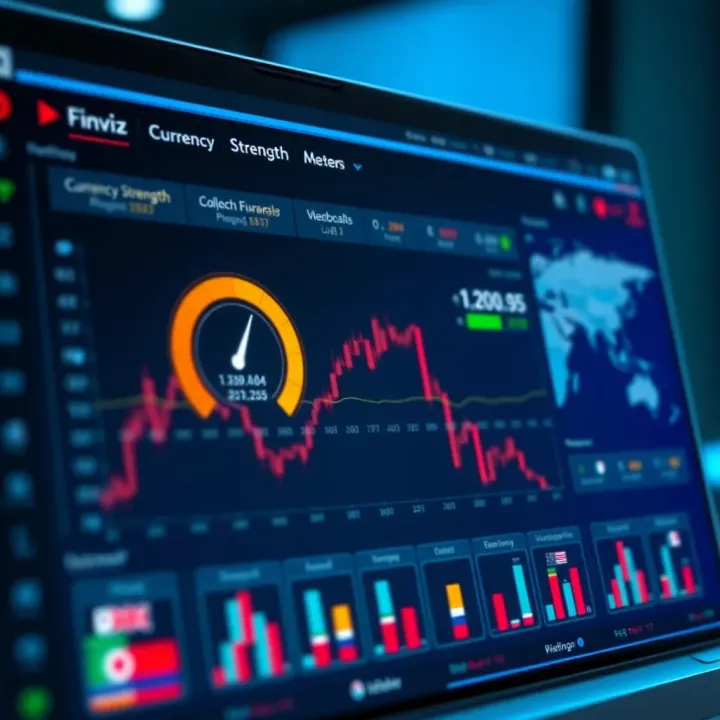
The meter works by analysing price movements and comparing them across currency pairs. It then assigns scores reflecting each currency’s current performance, making it easy to spot which currencies are strong and which are weak. This helps traders spot trends and potential entry or exit points at a glance.
Using the Finviz Currency Strength Meter allows you to manage currency risk better and plan trading strategies based on real market movements rather than guesswork.
Here are some practical uses of the meter for Kenyan market players:
Forex Traders: Quickly identify profitable currency pairs to trade or avoid volatile pairs you’re less confident about.
Importers and Exporters: Track currency trends and hedge risks by timing payments or hedging with forward contracts.
Financial Analysts: Incorporate currency strength insights into broader economic or investment reports.
In a market where currency values can shift quickly due to political or economic events, having a clear, updated view of currency power helps traders and businesses avoid costly surprises. The Finviz Currency Strength Meter is a straightforward way to keep tabs on currency dynamics and make informed choices without getting lost in too many technical details.
The Finviz Currency Strength Meter offers a clear snapshot of how different currencies perform relative to each other. For traders and investors, especially those dealing with multiple currencies like the Kenyan Shilling (KES), this overview is essential. It simplifies the complex forex markets by visualising which currencies are gaining ground and which ones are losing momentum. This helps users make quicker, informed decisions without drowning in countless price charts.
The meter uses visual tools such as colour-coded bars or charts to highlight currency performance. Strong currencies usually appear in green or with longer bars, while weaker ones are in red or have shorter bars. This immediate visual contrast helps traders spot prime opportunities at a glance. For example, if the US Dollar (USD) shows strong green bars against several currencies, a trader can consider pairs involving USD for potential gains.
Rather than just showing a single currency’s movement, the meter compares many currencies side by side. This broad view reveals patterns, like whether the Euro (EUR) is consistently strong against African or Asian currencies. For Kenyan investors, such insight is useful when planning trades involving EUR/KES or USD/KES pairs, where relative strength signals can influence timing and risk.
Currency markets move fast, and the Finviz meter refreshes data in near real-time using information from multiple reliable exchanges and financial sources. This ensures traders react promptly to market shifts caused by political news, economic reports, or Central Bank announcements, such as decisions by the Central Bank of Kenya (CBK). Being up-to-date reduces surprises and helps manage risks.
Most forex tools track price movements, but the Finviz meter emphasises relative strength. This means it measures how a currency performs against others, rather than its price alone. For instance, even if the KES is stable in price terms, it might be weakening compared to the US Dollar or British Pound, signalling traders to be cautious or consider hedging strategies.
The Finviz platform is designed to be straightforward, with clean layouts and intuitive controls. Traders don’t need to be tech whizzes to navigate it quickly. This suits busy professionals or those trading on the go via mobile devices in Nairobi or Mombasa, who need fast access to actionable data without clutter or confusion.
A good forex tool links currency strength with broader market context. Finviz integrates indices like the S&P 500 and NASDAQ, plus financial news headlines. This combination helps traders understand why a currency strengthens or weakens—be it due to stock market trends or recent economic developments. For example, rising US stocks often bolster the USD, which the meter reflects alongside news, enhancing trading insight.
The Finviz Currency Strength Meter delivers a practical compass for navigating the complex forex landscape, blending real-time data, visual clarity, and broad market context to better guide Kenyan traders and investors.
One of the key tasks when using the Finviz Currency Strength Meter is identifying which currencies are strong and which are weak at a given moment. The meter assigns a visual score reflecting a currency's relative strength against a basket of others. For example, if the US Dollar scores high while the Euro is low, it suggests the USD is gaining momentum and likely outperforming the Euro. Kenyan forex traders can use this insight to plan trades involving USD/Euro pairs, focusing on strong versus weak combinations.
Cross-currency comparisons go beyond just individual strength readings. The meter helps spot how two currencies relate to each other in relative strength. This matters because a strong currency paired with a weak one may signal a good trading opportunity. In Kenya, a trader watching the Kenyan Shilling (KES) and the US Dollar can see if KES is weakening compared to the USD, hinting it might be a good time to exchange shillings for dollars or vice versa, depending on the market direction.

Timing plays an important role in trading decisions. The meter helps traders decide when to enter or exit trades by signalling shifts in strength. For instance, if a currency that was weak begins showing signs of gaining strength, it could mark the start of a reversal. Kenyan investors need to combine these signals with broader market context to avoid jumping too early or too late. Proper timing based on the meter’s updates can maximise profits or prevent losses in fast-moving forex markets.
Trend following is a popular strategy using the strength meter. Traders identify the strongest currency and pair it with the weakest to capture the momentum. For example, if the British Pound is trending stronger while the Kenyan Shilling falls behind, a trend-following strategy would favour going long on GBP/KES. This simple approach can be effective in Kenya’s forex scene, especially when market trends align with economic data releases.
Risk management through diversification is another benefit. The meter allows traders to spread risk by investing in currency pairs with different strength profiles. Instead of concentrating on one currency pair, a trader might hold positions in several pairs where the strength readings suggest stability or complementary movements. This approach helps cushion against unexpected currency swings common in emerging markets like Kenya’s.
Finally, using the strength meter alongside technical indicators such as moving averages or Relative Strength Index (RSI) adds extra confidence. While the meter shows relative currency strength, technical tools provide entry and exit signals based on price trends and momentum. Combining these tools allows Kenyan traders to develop well-rounded strategies tailored to different market conditions and reduce reliance on any single indicator.
Using the Finviz Currency Strength Meter thoughtfully can improve trading decisions, but it works best with solid risk management and complementary analysis methods.
By carefully interpreting strength and weakness signals, almost anyone can enhance their forex trading outcomes in Kenya’s dynamic currency markets.
The Finviz Currency Strength Meter can greatly improve decision-making within Kenya's active M-Pesa forex ecosystem. Since many traders rely on mobile money platforms like M-Pesa for foreign exchange, having real-time insights into currency strength allows users to decide the best time to buy or sell foreign currency. For example, if the meter shows strong weakness in the US dollar against the Kenyan Shilling, a trader might choose to convert dollars to shillings sooner to avoid losses from further depreciation.
Timing is everything, especially when dealing with fluctuating exchange rates on mobile platforms. M-Pesa users trading forex or managing forex wallets benefit from quick access to currency strength data that influences the rates offered during transactions. This helps avoid costly delays or unfavourable exchange rates when funding international transactions or paying for goods in foreign currency.
The meter also supports small and medium enterprises (SMEs) engaged in import and export. These businesses often juggle payment timing and currency conversion risks that directly impact profit margins. By monitoring relative currency strength, SMEs can better plan when to settle foreign invoices or receive payments. For instance, a Kenyan exporter shipping to Europe may wait to convert euros to shillings when the euro shows strength, maximising returns.
Local economic factors strongly influence currency strength readings, which means the meter’s signals can have different implications in Kenya. Variables like inflation rates, political developments, or Central Bank of Kenya (CBK) interventions affect the Kenyan Shilling’s performance but might not immediately reflect in global currency metrics. As a result, traders need to consider these domestic influences alongside the meter’s data to make sound decisions.
Data latency and market volatility pose additional challenges. The Kenyan forex market can react swiftly to news such as CBK rate announcements or government policy changes, sometimes outpacing data refreshes on international platforms like Finviz. Traders should therefore confirm signals with up-to-date local information to avoid misjudging sudden shifts in currency strength.
Supplementing the currency strength meter with local news and CBK reports is essential. This ensures that users capture the full picture of factors driving exchange rates, including economic policies or cross-border trade agreements affecting the shilling.
Relying solely on the meter without keeping track of Kenya-specific financial news can leave traders exposed. For example, a sudden change in CBK’s monetary policy might weaken or strengthen the shilling faster than the meter reflects, impacting the timing of trades.
In summary, while the Finviz Currency Strength Meter offers valuable real-time insights, Kenyan traders and investors must integrate it with local financial context and timely information to optimise decision-making and manage risk effectively.
Using the Finviz Currency Strength Meter effectively can make a noticeable difference in your forex trading, especially when you deal with multiple currency pairs daily. This section covers practical ways to set up, incorporate, and use the meter to sharpen your trading strategy and manage risks smartly.
Navigating the Finviz platform is reasonably straightforward. Once logged in, you access the currency strength meter under the forex or currencies section, where it displays a clean, easy-to-understand dashboard. It offers quick visual cues—like colour-coded bars—to show which currencies are strong or weak at a glance. For someone busy like a trader juggling several assets, being able to quickly scan this data saves time and reduces guesswork.
Customising currency sets allows you to focus on the currencies that matter most to you. For instance, a Kenyan trader primarily dealing with the Kenyan Shilling (KES), US Dollar (USD), and Euro (EUR) can tailor the meter to track these specifically. This prevents clutter, so you’re not distracted by irrelevant pairs. Customisation also aligns the tool more closely with your trading plan, supporting a more focused approach.
Monitoring updates and alerts is key to staying ahead of market moves. The meter refreshes in real time, but you can also set notifications for particular shifts in currency strength. For example, if the KES suddenly weakens against the USD, an alert can help you act quickly, whether to hedge risks or seize trading opportunities. These alerts complement the daily routine, ensuring you don't miss out on important market signals.
Daily analysis supported by the meter helps in structuring trading decisions. Starting the day by checking which currencies are gaining or losing strength sets the stage for further analysis. Traders often combine this with review of economic calendars and news from sources like the Central Bank of Kenya (CBK) before committing funds. This routine makes decisions more grounded and less prone to emotional swings.
Combining the strength meter with chart patterns and volume analysis adds another layer of confidence. For example, if the meter shows the USD gaining strength while technical charts confirm an uptrend in USD/KES with rising trading volumes, this strengthens the case for entering a buy position. This complementary use of tools is practical and reduces risks.
Using the meter alongside popular trading platforms in Kenya, such as MetaTrader 4/5, or local brokers’ platforms, improves workflow efficiency. Some platforms allow manual or automated integration of external signals like those from Finviz, though often a manual check is enough. Incorporating the meter’s insights into these platforms means your trading decisions are not just based on historical price but also on relative currency performances.
Spotting early signs of currency reversals is one of the meter’s practical strengths. Sudden drops in a currency’s relative strength can indicate a reversal before price charts visibly confirm it. For instance, when the EUR starts to weaken against multiple currencies, even if charts haven't moved drastically, a cautious trader might tighten stop-loss orders or reduce exposure.
Adjusting positions based on strength shifts helps avoid locking into losing trades for too long. Suppose the USD shows steady strength for weeks but then begins to drop relative to others; scaling down USD positions and reallocating to stronger pairs can protect your capital and increase profit chances.
Avoiding overexposure to volatile pairs is critical, especially in the Kenyan market, where some forex pairs experience sudden swings due to local economic announcements or political events. The meter flags such volatility by showing abrupt strength changes, signalling traders to exercise caution or hedge their positions accordingly.
Using the Finviz Currency Strength Meter along with sound trading practices can provide a clearer picture of the forex landscape. This practical approach helps Kenyan traders protect investments while navigating an often unpredictable market.
In short, incorporating the Finviz Currency Strength Meter into your daily analysis, customising it to your needs, and using its insights to manage risk will strengthen your trading strategy. It’s a tool that, when used well, turns data into actionable intelligence in the fast-moving forex market.
Choosing the right currency strength meter can make a huge difference in how effectively you read forex signals and manage trades. Comparing Finviz with alternative tools helps you understand which features matter most for your trading style and the Kenyan market. It's not just about picking a popular tool; it’s about finding one that blends well with your daily analysis routine and local forex dynamics.
Several platforms offer currency strength meters alongside Finviz, including Investing.com, MyFxBook, and Forex Factory. These platforms provide similar real-time indicators, but many go deeper by integrating additional analytical tools such as correlation matrices, historical strength data, and multi-timeframe views. For instance, Investing.com lets users customise meter settings and view strength across more exotic currency pairs, which can be useful for traders keen on less mainstream markets beyond the G10 currencies.
However, some competing tools tend to overload users with information, which can be overwhelming if you prefer clean, straight-to-the-point displays like Finviz’s interface. On the flip side, less robust platforms might lack the timely updates and accuracy that Finviz offers, especially during volatile forex sessions important to Kenyan traders operating between local and international market hours.
Finviz stands out with its user-friendly layout and straightforward presentation, offering a clear visual snapshot of currency strengths within seconds. Compared to alternatives, Finviz updates frequently with quality data linked to broader market indices and news events, which keeps traders well informed about macroeconomic factors.
Yet, Finviz often doesn’t provide as deep analytical layers as other platforms, such as detailed historical trends or predictive analytics based on machine learning algorithms. While this keeps the interface simple, some traders seeking advanced forecasting tools might find Finviz less suitable for complex strategies.
For Kenyan traders, accessibility is key. Finviz is browser-based and doesn’t require heavy downloads, making it easy to access even on stable but limited internet connections common outside Nairobi. The platform is free with premium options, striking a balance between value and cost.
Other tools might offer mobile apps tailored to East African markets, sometimes with features like offline mode or local language support, which Finviz lacks. However, Finviz’s simple layout ensures smooth navigation even on mobile devices, a big plus considering many Kenyan traders rely on smartphones for market updates and trades.
Choosing the best currency strength tool depends on what fits your trading needs and how you integrate it with other analysis methods.
Currency strength doesn’t exist in isolation. Central Bank of Kenya (CBK) policy changes, inflation reports, and interest rate decisions significantly sway the Kenyan Shilling’s relative value. Combining Finviz meter signals with timely tracking of CBK announcements or global central banks like the U.S. Federal Reserve helps you anticipate shifts more confidently.
For example, if Finviz shows the USD gaining strength, but you know CBK is about to adjust the Kenyan Shilling's rate, this dual insight allows better timing of FX transactions or hedge decisions. Economic data releases like GDP growth and trade balances also enrich your understanding beyond what the meter alone reveals.
Political developments—from elections to trade negotiations—often cause sudden currency swings. In Kenya, events such as general elections or changes in trade tariffs within the East African Community (EAC) can affect the shilling’s strength significantly.
Using the meter alongside news feeds about such events helps you spot when market moves are driven by politics rather than typical trading patterns. This layered approach prevents misreading strength changes that might be temporary or event-driven.
Successful trading blends reading visual signals with understanding underlying causes. The Finviz meter offers a quick technical glance at currency power, but coupling it with fundamental insights builds a full picture.
For instance, a Kenyan trader might see the Euro weakening in the meter but recognising upcoming European Central Bank policy talks or recession risks adds context. Employing both technical snapshots and economic fundamentals sharpens your decision-making, reducing guesswork and improving risk management.
By combining Finviz’s real-time strength data with economic and political awareness, you position yourself well to navigate forex markets confidently, especially within the local Kenyan trading environment.
📈 Discover how TradingView helps Kenyan traders with real-time charts, data, and insights. Learn practical setup tips to match Kenya's trading needs and grow your portfolio.
📈 Learn how to sign up on Deriv.com with step-by-step guidance, tailored for Kenyan traders. Get tips on registration, verification, funding via M-Pesa, and smooth starting. 💻
📈 Learn how MetaTrader helps Kenyan traders access forex and commodities markets, set up accounts, use trading tools safely, and maximise profits with practical tips.
🚀 Ready to trade on Quotex? This guide shows Kenyan users how to sign in, fix common login issues, stay secure, and navigate the platform hassle-free.
Based on 8 reviews