
Understanding the Commitment of Traders Report
📊 Learn how to read the Commitment of Traders Report to spot market trends, understand key players, and make smarter trades in Kenyan and global markets.
Edited By
Oliver Grant
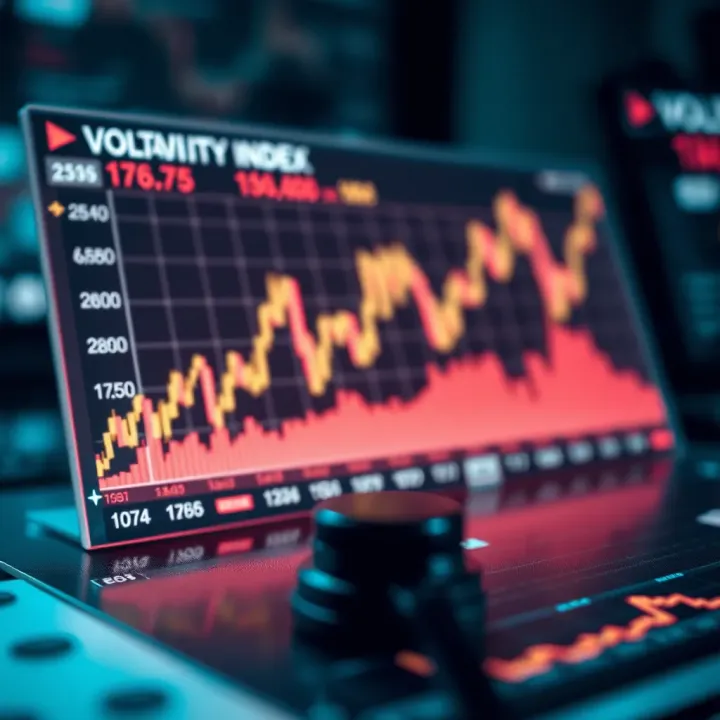
The Volatility Index, often known as the "fear gauge," is a vital tool in financial markets that measures expected price fluctuations over a short period. It reflects how much traders and investors anticipate the prices of stocks or indices to move, usually over the next 30 days. Unlike normal price indices, which show the average value of a set of stocks, the volatility index signals market uncertainty and potential risk.
In practical terms, when the volatility index rises sharply, it suggests investors are nervous about the future, expecting wider swings in prices. For example, during a political upheaval or a sudden economic shock in Kenya, the volatility index may spike as traders brace for unpredictability. Conversely, low volatility readings generally indicate calmer markets with fewer price surprises ahead.
Most volatility indices, like the VIX linked to the S&P 500, are calculated using options prices. Options are contracts that give the holder the right to buy or sell a stock at a set price within a certain timeframe. Since options prices include a premium for expected risk, higher option prices imply greater anticipated volatility.
Although Kenya does not yet have a widely recognised local volatility index, understanding the global VIX helps Kenyan investors gauge risk, especially when trading shares on the Nairobi Securities Exchange (NSE) that are affected by global trends. For instance, sharp movements in international markets can influence how volatile local stocks become.
Risk Management: By monitoring the volatility index, traders can decide when to adjust their portfolios or hedge their positions to avoid heavy losses.
Market Timing: Many investors use volatility spikes to identify attractive entry or exit points. For example, a sudden increase in volatility may present buying opportunities if the market has overreacted.
Sentiment Indicator: It reveals the market's mood, helping investors understand whether optimism or fear dominates.
The volatility index acts like a weather forecast for markets: it doesn’t predict exact storms but warns of turbulence ahead, allowing you to prepare appropriately.
Understanding this index, its calculation, and impact can greatly improve investment decisions, especially in Kenya's growing and interconnected financial markets.
Market volatility refers to how much and how quickly the price of an asset or market index moves up and down. In practical terms, it shows the uncertainty or risk perceived by investors. For example, during political unrest or economic shocks, stock prices might swing sharply within short periods, reflecting high volatility. This matters because sudden price swings can lead to bigger gains or losses, so understanding volatility helps traders and investors gauge the market mood.
The volatility index—often called the VIX—is a numerical gauge that estimates expected market fluctuations over the next 30 days. It’s derived mainly from the prices of options on the S&P 500 index, which reflect what traders expect in terms of risk. A higher VIX value means investors foresee more turbulence ahead, while a lower value suggests calm markets. For instance, when the VIX spikes during crises, it often signals fear and uncertainty among investors.
The core purpose of the volatility index is to provide a quick snapshot of market sentiment and anticipated risk. While traditional market indicators focus on price levels, the volatility index looks at expected price movement magnitude and speed. Investors use this information to adjust their risk exposure, such as reducing equity holdings or buying protective options.
Beyond monitoring fear, the VIX acts as a useful tool for designing trading strategies. It allows portfolio managers to decide when to hedge or how to balance risk and returns. For example, Kenyan investors holding NSE stocks might watch global volatility indicators like the VIX alongside local news to anticipate possible shocks that could affect their portfolios.
The volatility index was developed in 1993 by the Chicago Board Options Exchange (CBOE) as a means to quantify market expectations of near-term volatility. Before this, investors had little reliable way to measure market fear or calm objectively. The VIX quickly became popular because it was based on real option prices and represented genuine market expectations rather than after-the-fact price moves.
Over the years, the VIX has evolved in both calculation and application. Originally, it used only S&P 100 options but later shifted to a more liquid and broader set of S&P 500 options, improving accuracy. Its role has also expanded beyond a market fear gauge to an asset for trading itself, with products like VIX futures and exchange-traded funds (ETFs).
That said, awareness of the index’s limits has grown. The VIX mainly reflects expected volatility for U.S. markets, which means local investors in Kenya or East Africa should consider it alongside regional factors. Still, understanding the history and development of the volatility index helps investors appreciate why it remains a key global risk indicator today.
The volatility index does not just reveal fear — it gives an actionable glimpse into future market swings, helping investors better prepare in uncertain times.
Understanding how the volatility index is calculated is key to grasping what the numbers really mean for the market. This calculation reflects expected price swings, which investors and traders use to make informed decisions. Since the index is based on options markets, it offers a forward-looking view rather than relying only on past price movements.
Options are contracts giving the right to buy or sell an asset at a certain price by a set date. Traders use them to protect positions or to speculate on price changes. The volatility index estimates future market volatility by analysing the prices of these options, especially those on major stock indices like the S&P 500.
The logic is this: if options are expensive, it usually means investors expect bigger price changes soon, so implied volatility is high. Conversely, cheaper options imply calmer markets. For example, during sharp events like elections or crises, option premiums tend to rise, pushing the volatility index upward. This method provides a timely snapshot of risk expectations, unlike historical data which lags behind.
Key inputs in this calculation include:
Prices of out-of-the-money call and put options across various strike prices
Time to expiry of these options
Current underlying index level
The formula used averages these option prices weighted by strike distance and expiries to estimate expected volatility over the next 30 days. This nuanced approach captures both upside and downside risk perceived by the market.
The volatility index value indicates expected annualised price variation in percentage terms over the coming month. A low value, say around 12 to 15, suggests calm markets with investor confidence. A high value, often above 30, points to increased uncertainty and risk.
For instance, during the 2008 global financial crisis, the VIX spiked beyond 80, signalling extreme fear. In contrast, periods of steady growth and relative peace in markets tend to see VIX values below 20. Investors tracking these levels can adjust their strategies—tightening risk controls when the index climbs, or seeking opportunities when it falls.
The index serves as a barometer of market sentiment. Rising values typically reflect fear or caution, while falling values may indicate optimism or complacency. But this isn't always straightforward; sometimes markets are volatile but optimistic due to positive news. That said, a sudden jump in volatility often warns of impending stress or corrections.
The volatility index doesn’t predict market direction; instead, it reveals how bumpy the ride might be ahead.
For traders and investors in Kenya and beyond, understanding these numbers helps in portfolio risk management and timing. Recognising whether the market is bracing for turbulence or enjoying a quiet spell guides decisions on hedging and asset allocation.
In summary, the volatility index's calculation based on options pricing provides a practical and timely gauge of market expectations. Interpreting its numerical value allows you to read market mood, helping you prepare for calm or choppy conditions ahead.
The Volatility Index offers valuable insights that traders and investors can use to navigate the ups and downs of financial markets. Understanding how to apply this index practically helps improve decision-making, manage risks, and time market moves better. Kenyan investors, like those trading on the Nairobi Securities Exchange (NSE), benefit greatly when they incorporate this indicator into their strategies.
The Volatility Index acts as a barometer for expected market swings, giving investors a snapshot of risk at any given moment. When the index spikes, it often signals increased market anxiety or uncertainty, suggesting heightened danger for investments. For example, during political instability or global shocks such as a sudden oil price hike, a rising Volatility Index warns Kenyan investors to take protective measures.
By monitoring these risk levels, investors can decide when to reduce exposure or rebalance portfolios. For instance, if the index indicates rising volatility, one might shift some assets from equities to more stable government bonds or money market instruments, which are less affected by price swings.
Hedging strategies become more effective when informed by the Volatility Index. One practical method is buying options contracts to protect against price drops. A Kenyan investor using Safaricom shares may purchase put options as insurance against a sudden decline if the Volatility Index shows growing market tension.
Another strategy is diversifying investments across asset classes and sectors, responding to volatility signals by not putting all funds in one basket. Using derivatives such as futures or engaging in short selling are other ways professional traders attempt to cushion the impact of unpredictable market moves. However, these require a sound grasp of the products and associated costs.
Traders often watch the Volatility Index to spot moments when market sentiment shifts. A declining index might suggest calmer times ahead, hinting it could be safer to buy or hold investments. Conversely, a sharp increase can mean growing fear, advising caution or prompting profit-taking.
For example, a Kenyan investor watching the NSE 20 Share Index might wait for volatility to settle before entering a position or consider selling when volatility reaches unusually high levels, anticipating price corrections.
Despite its usefulness, the Volatility Index should not be the only tool guiding investment decisions. It reflects market expectations but does not guarantee future movements. Sudden events or structural changes in the economy can lead the index to lag or fail to predict specific outcomes.
Additionally, excessive reliance can cause missed opportunities if traders hesitate during high volatility periods that later lead to strong recoveries. It’s wise to combine the Volatility Index with other analyses such as fundamentals, technical patterns, and macroeconomic factors for a balanced approach.
The Volatility Index provides crucial warnings and signals but pairing it with broader market insight ensures better protection and timing in trading and investing.
Local market volatility indicators provide essential insights into unique economic conditions and investor behaviours that differ from global patterns. In Africa, where market infrastructures can be less mature, these indicators help gauge the mood of local investors and adjust trading strategies accordingly. For example, the Nigerian Stock Exchange uses specific volatility measures to assess market stress, reflecting local political or economic events.
In Kenya, the Nairobi Securities Exchange (NSE) does not yet have a dedicated volatility index like the VIX in the US, but alternative metrics, such as the NSE 20 Share Index fluctuations and implied volatility from options on top listed firms, serve similar purposes. These local indicators guide traders and fund managers to understand risk levels better, especially amid fluctuating currency values and periodic macroeconomic shocks.
Adoption and relevance in Kenya centre on how investors and businesses apply these insights to manage uncertainty. While not as established as in global markets, volatility awareness is growing in Kenya, driven by increased market participation and sophistication. Financial institutions and brokers educate clients about volatility concepts, helping them incorporate risk monitoring into portfolio management.
The volatile nature of emerging markets like Kenya’s means ignoring volatility can lead to mishaps, such as mispriced assets or poorly timed investments. Therefore, even in the absence of a formal volatility index, Kenyan market participants rely on proxy measures and local economic indicators, including inflation rates, political developments, and foreign exchange movements, to approximate expected market swings.
Volatility directly influences investment decisions by affecting risk-reward calculations. Kenyan investors often face sudden shifts driven by global shocks or local events such as election cycles or policy changes. Understanding these fluctuations allows them to time their entry or exit better and pick instruments suited for high or low volatility.
For example, an investor may avoid heavily traded stocks during periods of sharp volatility spikes to minimise potential losses. Others might choose short-term government securities or diversify into safer sectors when markets look unstable. This approach recognises that volatility is not just noise but a signal that could affect capital preservation and growth.
Business planning in volatile environments requires robust strategies to cope with uncertainty in costs, demand, and financing. Kenyan businesses, especially SMEs in agriculture or manufacturing, often deal with unpredictable weather patterns and currency risks that affect input prices and sales.
By factoring in volatility trends, firms can negotiate better pricing, secure flexible contracts, or build cash reserves to cushion shocks. For instance, a manufacturer relying on imported raw materials may hedge foreign exchange exposure or adjust production schedules around volatile periods. Such practical measures improve resilience and long-term sustainability in a dynamic market.
Volatility is not merely a challenge but an opportunity for Kenyan investors and businesses who learn to read market pulse and act accordingly. Awareness and adaptation can turn uncertainty into an advantage rather than a setback.
Local volatility indicators help reflect unique market conditions in African and Kenyan contexts.
Kenyan markets rely on alternative measures and economic factors due to the absence of a formal volatility index.
Volatility understanding shapes better investment decisions, balancing risk and opportunity.
Businesses operating in Kenya benefit from planning that accommodates shifting economic conditions and market swings.
This perspective on the volatility index beyond global markets underscores its relevance in Kenya’s financial ecosystem, driving smarter decisions in a world where change is constant.
The Volatility Index (VIX) offers valuable insight into market expectations but it’s not without misunderstandings and practical challenges. Many investors and traders tend to misinterpret what the index signals, which can lead to poor decisions. At the same time, the availability and reliability of data, along with diverse market conditions, affect how useful the VIX truly is in different settings.
The VIX is often called the "fear gauge" because a rising index typically points to increasing market uncertainty and nervousness. However, a high VIX doesn’t always mean trouble; it can indicate opportunity too. For example, when the VIX spikes sharply, some investors see this as a chance to buy assets cheaply before the market recovers. Kenyan investors might recall the 2020 market upheaval when volatility shot up yet savvy players used the dip to invest in NSE stocks at discounted prices. Treating every jump in the VIX as a sign of immediate danger could result in missed chances.
Relying solely on the VIX to make trading or investment decisions is risky. The index reflects expected volatility but does not predict direction or guarantee outcomes. For instance, if the VIX is low, complacency can set in and investors might ignore underlying risks like political developments or economic data that could change market trends. In Kenya, where external shocks such as commodity price changes or county budget announcements impact markets, using the VIX alone ignores these local factors. Successful trading involves combining the VIX with other fundamental and technical analysis.
Getting accurate and timely VIX data can be difficult, especially outside the main global markets. Unlike established indices like the NSE 20 Share Index, Kenya lacks a widely used local volatility index, so traders sometimes rely on proxies or foreign VIX equivalents. This affects decision-making because the data might not fully represent local market sentiments. Furthermore, data quality issues – such as delays or miscalculations in options prices feeding into the VIX – can distort the index and lead to poor judgements.
The VIX measures expected 30-day volatility, so in calm or steadily rising markets its readings might be low and seen as less relevant. Yet, low volatility doesn’t guarantee safety; markets can still be vulnerable to shocks. On the flip side, during very turbulent times, the VIX may reach extreme highs, sometimes overshooting the actual risk. For Kenyan investors who watch global cues but face a market influenced by local events, the VIX has its limits. It’s best treated as one of many tools, especially in markets where economic and political variables count heavily.
The Volatility Index is useful but not foolproof; understanding its limits helps you avoid costly mistakes and identify real opportunities in varying market environments.
By recognising these misconceptions and practical challenges, traders and investors can better use the VIX as a guide rather than a gospel, blending it with local knowledge and broader analysis to make informed choices.
📊 Learn how to read the Commitment of Traders Report to spot market trends, understand key players, and make smarter trades in Kenyan and global markets.
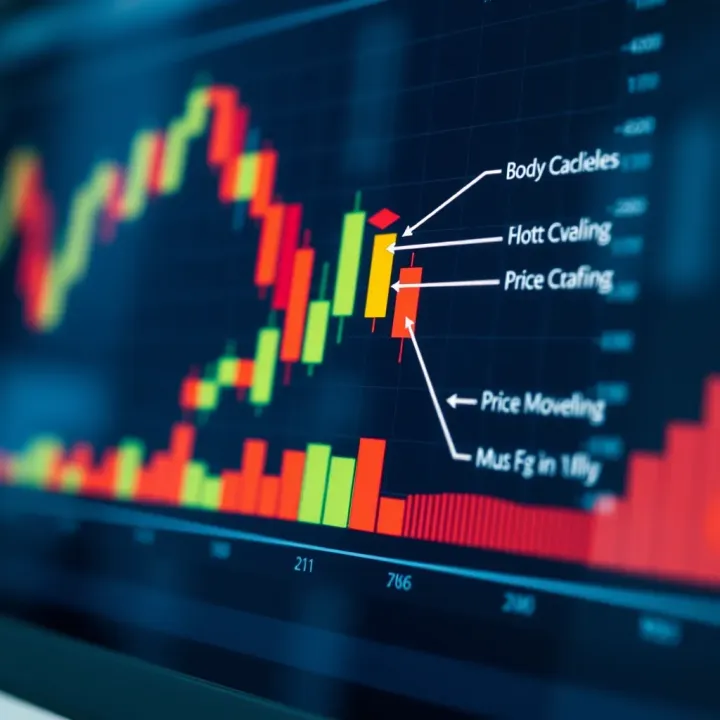
📈 Learn how to read candlestick charts for smarter trading decisions. Discover key patterns, history, pros, and cons in financial markets analysis.

Explore how bots operate, their types, and their effects on industries 🌐. Learn about security and ethics to better manage and use bots effectively.

Explore Deriv Com's user-friendly interface 🔍, diverse financial instruments 📊, secure accounts 🔒, and advanced trading tools to trade confidently in Kenya.
Based on 7 reviews