
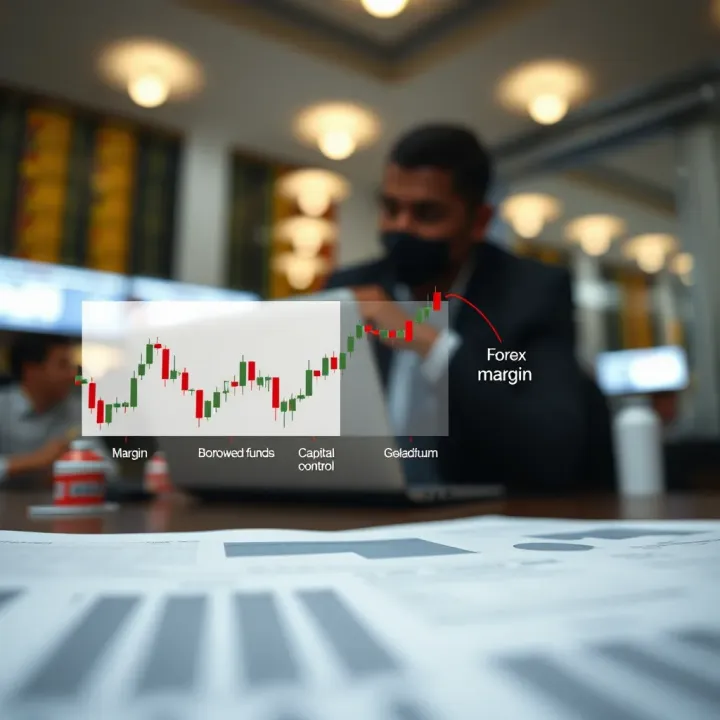
Understanding Margin in Forex Trading for Kenyan Traders
📉 Learn how margin in forex trading helps Kenyan traders control bigger positions with less capital. Understand margin calls, risks, and smart margin management to avoid big losses.
Edited By
Isabella Turner
Forex trading has steadily gained attention among Kenyan traders looking to diversify their income sources beyond traditional investments like stocks or real estate. Understanding how the forex market operates is key before risking hard-earned money. This section introduces the essentials tailored for Kenyan traders who want to build solid forex knowledge.
Forex, short for foreign exchange, refers to buying and selling currencies to profit from changes in exchange rates. Unlike the Nairobi Securities Exchange (NSE), forex operates 24 hours daily across global financial centres, including London, New York, and Tokyo. This continuous nature gives Kenyan traders the flexibility to trade after work hours or during quiet market periods.
Many Kenyans get lured by quick-profit stories in forex but often jump in without proper training. This frequently leads to steep losses. A sound forex education helps you avoid common pitfalls like overleveraging or chasing volatile trends.
"Without a firm grasp of how currency pairs fluctuate and what factors influence them, trading can feel like guesswork rather than a calculated business."
Currency Pairs: Understand majors (e.g., USD/KES, EUR/USD) versus crosses.
Leverage and Margin: Kenyan traders should carefully use leverage as it magnifies both gains and risks.
Spread and Commission: Know the trading costs, as some brokers charge hidden fees.
Technical and Fundamental Analysis: Balance chart reading with awareness of global economic events affecting currencies.
Imagine trading USD/KES around national events impacting export/import flows – say, changes in coffee or tea export tariffs could influence the shilling’s value. Applying your understanding can help position trades logically rather than on hunches.
In upcoming sections, the guide will break down how to identify reliable courses, develop strategies suitable for Kenyan market realities, and manage risks prudently using tools like stop-loss orders and disciplined capital allocation.
Starting with a strong foundation in these basics will improve your chances to trade forex profitably, not just running after quick wins.
Grasping how the forex market works is essential for anyone who wants to trade currencies successfully, especially for Kenyan traders. This market moves fast and can be complex, but understanding its basics opens doors to opportunities for profit and portfolio diversification. Moreover, forex trading connects the Kenyan economy to global financial flows, making it relevant beyond just speculation.
Forex trading means buying one currency and selling another at the same time. The goal is to profit from changes in exchange rates between the two currencies. For example, if you think the US dollar will strengthen against the Kenyan shilling (KSh), you would buy USD/KES hoping to sell later at a better rate. This practical buying and selling make forex a liquid and accessible market.
Currency pairs work by quoting the value of one currency against another. The first listed currency is called the base currency, and the second is the quote currency. If USD/KES is trading at 110, it means one US dollar is worth 110 Kenyan shillings. Traders watch these pairs to spot potential gains or hedges relevant to their business or personal finances.
Globally, currency markets manage trillions of dollars daily. They influence trade, investment, and remittance flows across borders. Central banks, multinational companies, and individual traders all participate. For Kenya, this means forex trading reflects the economic health and monetary policies at play, including how remittances or exports affect the shilling's value.
The forex market offers Kenyans several opportunities. For instance, it provides a chance to earn extra income outside the typical job market, which is helpful given the rising unemployment rates. Traders can also use forex for hedging, especially businesses dealing in imports and exports who want to protect themselves from currency swings.
Compared to other investment options in Kenya such as real estate, government bonds, or NSE stocks, forex trading is more liquid and can start with relatively small capital. While buying a plot may require large funds and time, forex trading allows you to enter the market quickly and adjust positions during market hours, especially during London and New York sessions.
That said, Kenyan forex traders face unique challenges. Volatile exchange rates mean losses can pile quickly without proper risk management. Regulatory oversight for forex in Kenya is also evolving, so choosing reputable brokers is vital. Benefits include flexible trading hours and access to vast markets, but traders must develop discipline and avoid chasing quick wins.
Understanding these fundamentals equips Kenyan traders to approach forex trading with realistic expectations and sound strategies.
By appreciating both the global role of forex and its practical local impacts, traders can navigate the market confidently and align their activities with Kenya's economic trends.
Grasping the core concepts is essential for anyone serious about forex trading. These basics form the foundation of your trading knowledge, helping you understand how the market functions and how to navigate it effectively. For Kenyan traders, getting these right can make the difference between steady gains and unnecessary losses.
Understanding what a pip is crucial — it's the smallest price move a currency pair can make, often the fourth decimal point. For instance, if the USD/KES rate moves from 110.2500 to 110.2600, that’s a one-pip movement. Traders track pips to measure profit or loss in trades. Lots refer to the size of each trade, typically measured in standard lots of 100,000 units, but many brokers offer mini or micro lots suitable for small accounts. Leverage lets you control a larger position with a smaller deposit, say 1:100 leverage means you can trade KSh 100,000 with just KS,000. While leverage boosts potential gains, it increases risk significantly.
Most brokers earn through the spread — the difference between the buying (ask) and selling (bid) price. For example, if EUR/USD has a bid price of 1.2000 and an ask price of 1.2002, the spread is two pips. Lower spreads save costs for traders, especially if you trade often. Sometimes, instead of spreads, brokers charge commissions on trades. Kenyan traders should compare these costs because high spreads or commissions can eat into profits quickly, especially on short-term trades.

Forex markets operate 24 hours from Sunday evening to Friday evening, spanned across global financial centres including London, New York, Tokyo, and Sydney. Liquidity, or how easy it is to buy or sell an asset, peaks when major markets overlap, like London and New York in the afternoon EAT. This influences price stability and transaction costs. Kenyan traders dealing during local working hours might find the London session aligns well, offering good volatility and liquidity for USD/KES or EUR/USD pairs.
This involves studying economic indicators, central bank policies, political events, and trade flows to predict currency movements. For Kenyan traders, monitoring the US Federal Reserve decisions or the Bank of Kenya’s policy changes can give clues on currency trends. For instance, if the Fed raises interest rates, the dollar often strengthens, affecting USD/KES rates. Fundamental analysis helps traders grasp the bigger picture beyond just charts.
This approach uses price charts and indicators to forecast future movements, relying on historical data patterns. Tools like moving averages, RSI (Relative Strength Index), and Fibonacci retracements help identify entry and exit points. In Kenya's fast-moving forex scene, technical analysis often guides day traders who need quick decisions based on price trends rather than waiting for economic reports.
Sentiment analysis gauges the mood of the market, whether traders feel bullish or bearish. Major news events can cause sudden spikes or crashes, like election results or geopolitical tensions. Kenyan traders should watch both global news and local developments that influence the shilling. Quick reactions to news through mobile alerts or trusted sources can provide trading advantages, but it’s key to combine sentiment with solid analysis to avoid emotional traps.
Getting these core concepts right is like laying a strong foundation for your trading house — without them, the whole structure risks collapse. Kenyan traders benefit by tailoring these basics to the local currency and market idiosyncrasies for smarter trading decisions.
Trading strategies and techniques form the backbone of successful forex trading. For Kenyan traders, understanding various approaches and practical methods helps in navigating the volatile currency markets confidently. These strategies differ by time frame, risk tolerance, and investment goals, making it vital to choose one that suits your style and schedule.
Day trading and scalping focus on quick trades taken within short time spans—often minutes or hours. Day traders aim to profit from small price moves by opening and closing trades within the same day, which limits overnight risk. Scalpers, a subset of day traders, make numerous trades during a session targeting tiny gains per trade. This approach requires solid market knowledge, fast decision-making, and constant monitoring of charts, often using technical indicators like moving averages and RSI.
For instance, a Nairobi-based day trader might prefer trading the USD/KES pair during Kenyan market hours when liquidity peaks. However, day trading demands enough time and a strong nerve to endure rapid market fluctuations.
Swing trading principles operate on a medium-term horizon, holding positions from several days to a few weeks. Swing traders focus on capturing ‘swings’ or price moves within trends. This technique combines technical and fundamental analysis, enabling traders to spot opportunities around support and resistance levels or economic releases. A swing trader in Kenya might track major currency pairs like EUR/USD or GBP/USD for trend setups, giving enough time to balance trading with daily commitments.
Swing trading suits those who cannot watch the market continuously yet want to engage frequently. It involves less stress than day trading but requires clear entry and exit rules.
Position trading for longer-term investors involves holding trades for weeks, months, or even quarters. This strategy relies heavily on fundamental data like interest rate changes, political developments, or long-term economic indicators. Position traders ignore short-term noise, focusing instead on the bigger market picture.
A Kenyan investor with a preference for long-term trends might invest in USD/ZAR or USD/NGN, reflecting regional economic movements. Position trading is less time-consuming daily but needs patience and capital to ride out market swings.
Setting realistic goals is the first step. Clear, achievable targets based on your capital and risk appetite help avoid emotional decisions. For example, aiming to grow your trading account by 5% monthly is much more manageable than expecting to double it in weeks. Realistic goals also prevent overtrading and recklessness, common pitfalls among new traders.
Choosing currency pairs suited to your style tailors your trading to your knowledge and market access. A scalper might prefer liquid pairs like USD/KES or EUR/USD because tighter spreads reduce costs on many trades. Conversely, a position trader might explore emerging market pairs such as USD/NGN for higher volatility and longer trends.
Selecting pairs also considers trading hours and your availability. If you trade after office hours, focus on pairs active then to avoid barren markets.
Timing trades and managing exits is crucial for maximising profits and cutting losses. Traders use stop-loss and take-profit orders to automate this process, reducing emotional pressure. For example, a swing trader may enter a trade after price confirms support, setting a stop-loss just below it and targeting the next resistance level for exit.
Timing also involves understanding market sessions; the London and New York sessions tend to offer higher volatility and liquidity, ideal for entries and exits. Kenyan traders should align their trades with these sessions to benefit from market movements.
A solid trading plan combining a defined strategy with disciplined execution improves consistency and confidence, essential qualities for thriving in the forex market.
Managing risk and one's trading mindset are the cornerstones of lasting success in forex trading. In Kenya's fast-evolving market, traders face not just volatile price swings but also emotional challenges that can cloud judgment. Learning to control risk and master psychological discipline helps protect capital and sustain consistent gains over time.
A stop-loss order limits your losses by automatically closing a trade when the price reaches a specified point. For instance, if you buy the USD/KES at 110 and set a stop-loss at 108, the trade closes if the price drops to 108, preventing further losses. Conversely, a take-profit closes a trade when your target profit is reached, locking in gains without the need for manual intervention. Using these tools ensures you can manage downside risk and secure profits without constant screen-watching, especially if you are busy during market hours.
Position sizing dictates how much of your capital you risk on a single trade. For example, risking 2% of your total capital on one position means a controlled loss, helping preserve your trading account after a losing streak. Overleveraging, a common pitfall, magnifies both gains and losses, exposing traders to unnecessary risks. Proper position sizing helps Kenyan traders match their risk appetite realistically and avoid wiping out their accounts through careless exposure.
Instead of betting all funds on a single currency pair like EUR/USD or USD/KES, traders should consider spreading risk across several pairs. This reduces dependency on any one market's movements and lowers volatility in your overall portfolio. Kenyan traders, for example, could combine trades in major pairs with those involving regional or emerging market currencies, balancing opportunities with risk and cushioning against local market shocks.
Emotions such as fear, greed, and impatience can derail even the most well-planned trades. For instance, a trader might hold onto a losing position hoping the market will turn around, exposing themselves to larger losses. Others may chase quick profits impulsively, risking poor decisions. Being aware of these tendencies prepares traders to pause and stick to their strategy despite market noise.
Consistency comes from following a clear trading plan and sticking to set rules on entries, exits, and position sizes. Kenyan traders who journal their trades and review outcomes regularly tend to improve their approach and reduce impulsivity. Over time, this builds confidence and a steady rhythm, which is key to enduring the ups and downs of forex markets.
Losses are part and parcel of trading. Accepting them without frustration helps traders recover more quickly and learn valuable lessons. Rather than blaming the market or external factors, disciplined traders analyse what went wrong and adjust their strategies accordingly. This mindset keeps them from emotional breakouts that often lead to further losses.
Managing your money carefully and keeping emotions in check not only protects your capital, but also improves your decision-making and long-term trading success in the Kenyan forex market.
By mastering these risk management and psychological skills, forex trading becomes more than guessing price moves; it becomes a thoughtful profession where calculated risks meet disciplined execution.
Picking the right forex course shapes your journey in forex trading. Kenyan traders face unique market conditions, including local economic factors, currency behaviours, and trading regulations. A course that addresses these realities helps you avoid generic advice that might not work here. Choosing wisely saves time, money, and builds your confidence faster by focusing on what's relevant.
Your forex course should cover topics tailored to the Kenyan environment. For example, it should explain how the Kenyan shilling interacts with major currencies like the US dollar or euro. Also, understand how local economic events—like Central Bank of Kenya (CBK) policy changes or agricultural export cycles—affect forex trading. Lessons on using platforms common in Kenya, such as MetaTrader with local brokers, add practical value.
If a course lumps you with global theory but ignores Kenya's market quirks, you might struggle to apply what you learn. Look for courses that mention Kenyan-specific regulation, taxes, or trading hours that factor in EAT (East Africa Time). This relevance turns abstract concepts into real opportunities tailored to your trading context.
Who teaches the course matters. Kenyan traders should check if instructors understand local markets and have a proven trading background. Trainers with actual results or who have worked with Kenyan traders bring insights you'd otherwise miss. For example, a mentor who adapted strategies during local economic shocks like election years can guide you better through similar scenarios.
Also, see if trainers stay current with market trends, including mobile money payments integration or recent CBK policies. Their ability to translate this knowledge clearly shapes your learning experience and practical success.
What past students say reveals a lot. Look for feedback from Kenyan traders who completed the course. Their stories highlight strengths and gaps, like whether the course offers enough practice or if the support team responds quickly to questions.
You might spot patterns, such as success in small-cap trading or struggles with technical analysis. These insights help you pick a course that fits your learning style and meets Kenyan traders’ expectations. Real testimonials also discourage fraud or scammy courses common in online forex training.
Online courses offer flexibility to learn from anywhere in Kenya, whether Nairobi or Kisumu. They often include video lessons, quizzes, and live webinars. But in-person courses may suit those who prefer direct interaction and networking with fellow traders and instructors. For instance, Nairobi has some reputable forex workshops providing hands-on training.
Your choice depends on your schedule, learning style, and internet access. Online tends to be cheaper and self-paced, while in-person can give immediate answers and localised insights.
Cost varies widely—from free basics on YouTube to comprehensive paid courses costing tens of thousands of shillings. Avoid courses charging exorbitant fees but offering little. Instead, focus on what you gain: quality content, access to experienced trainers, and practical tools.
Some courses bundle trading simulators or personalised mentorship, which weighs in value assessment. A mid-range course costing KSh 15,000–30,000 that delivers solid results is often better than pricey programmes loaded with marketing.
Trading doesn’t stop after lessons end. Look for courses providing ongoing mentorship through WhatsApp groups, Telegram, or forums. This support helps you handle live trades, decode market changes, and stay disciplined.
A community of Kenyan traders sharing tips, success stories, or warnings adds real-world learning beyond the classroom. It prevents isolation, which is a big challenge in forex trading here. This backing often separates casual learners from consistent profiting traders.
Choosing a forex course with relevant content, credible trainers, fair pricing, and lasting support puts Kenyan traders ahead in a market that can be tricky but rewarding.
📉 Learn how margin in forex trading helps Kenyan traders control bigger positions with less capital. Understand margin calls, risks, and smart margin management to avoid big losses.
Explore Deriv Forex trading in Kenya 🇰🇪! Learn account setup, tools, risk management, and strategies for smart trading. Start your journey with confidence 🚀.
🤖 Explore bot trading in forex: understand how automated systems work, key benefits, risks, setup tips, and insights for traders in Kenya. 📈🇰🇪

📈 Learn how Kenyan traders can navigate forex markets safely with practical tips on strategies, risk management, regulation, and tech tools for better results.
Based on 15 reviews